


What's Happening?
The U.S. military's Punitive Expedition into Mexico in 1916, launched to pursue Pancho Villa after his raid on Columbus, New Mexico, significantly influenced U.S. road construction and military-industrial relations. Initially intended as a swift punitive
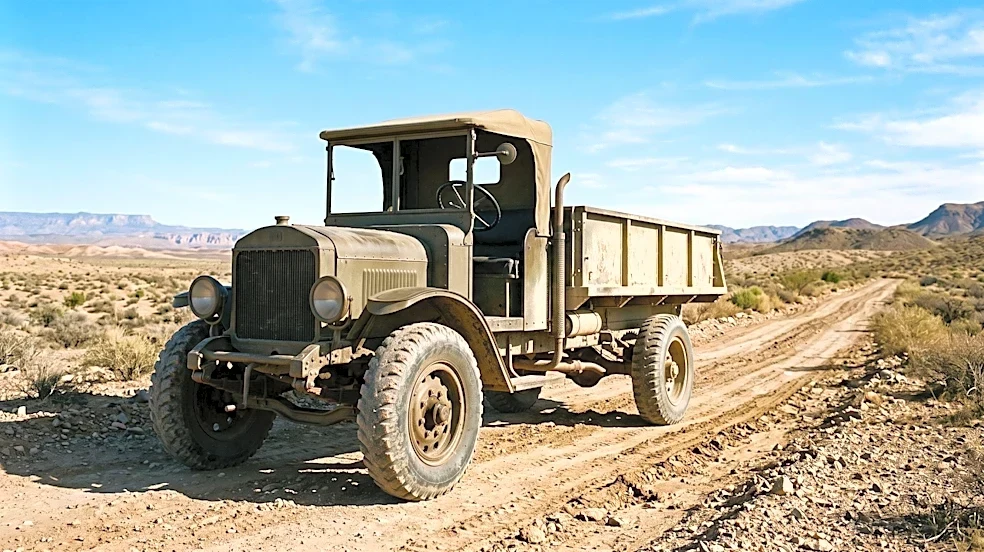
action, the expedition evolved into a year-long engineering challenge due to the lack of adequate roads. The deployment of thousands of motor vehicles quickly degraded existing dirt roads, highlighting a novel hazard for the U.S. Army, which previously had limited automotive experience. This led to extensive roadbuilding efforts, with the construction of 157 miles of new roads and the repair of 224 miles, often utilizing Mexican and Mexican American labor. Despite these efforts, the expedition failed to capture Villa, who was more familiar with the unroaded terrain.
Why It's Important?
The Punitive Expedition, though unsuccessful in its primary objective, had profound long-term implications for U.S. infrastructure and national security. It underscored the critical link between robust road networks and military mobility, shifting public perception to associate roadbuilding with national defense. This newfound understanding directly contributed to the passage of the Federal Aid Road Act in 1916, followed by its expansion five years later, laying the groundwork for a national system of highways. The expedition also fostered technical exchange between U.S. manufacturers and the military, leading to new standards for military vehicles, such as khaki paint and higher chassis, which later influenced commercial vehicle design. This period marked an important moment in the development of U.S. military-industrial relations, foreshadowing the concept of a 'military-industrial complex' later articulated by President Eisenhower.
What's Next?
The legacy of the Punitive Expedition continued to shape U.S. infrastructure planning for decades. Following his return, Brigadier General John Pershing commissioned Dwight Eisenhower to design a national system of military highways, resulting in the 'Pershing Map' of 75,000 miles of strategic roads. This map served as a reference for road builders until the 1950s, when the construction of the Interstate Highway System began. The principles and lessons learned from the expedition regarding road construction and military logistics would continue to inform U.S. defense and infrastructure strategies. The ongoing development of military-grade standards and the collaboration between the military and private industry, initiated during this period, would become a defining characteristic of U.S. defense capabilities.
Beyond the Headlines
The Punitive Expedition offers a deeper insight into the complex interplay of military strategy, technological advancement, and national policy. The initial underestimation of logistical challenges, particularly road infrastructure, reveals a learning curve for the U.S. military in the early 20th century. The reliance on local labor for road construction also highlights the often-overlooked human element in military operations and the economic impact on border communities. Furthermore, the public's shift in associating 'good roads' with national security, rather than just tourism, reflects a broader societal response to perceived threats and the evolving role of government in infrastructure development. This historical event serves as a foundational example of how military needs can drive significant domestic policy changes and technological innovation, with lasting effects on the nation's physical and industrial landscape.