






What's Happening?
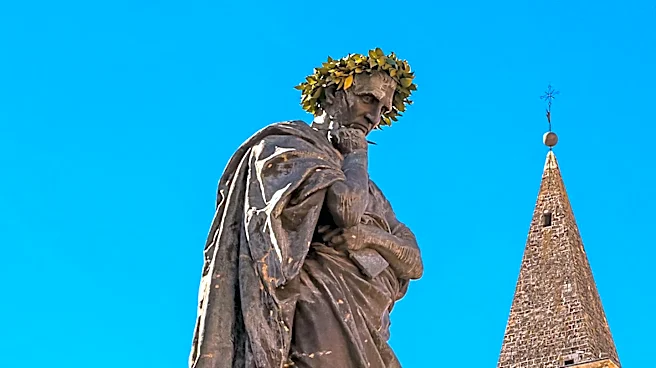
Dante Alighieri's epic poem, 'The Divine Comedy,' details a profound narrative exploring the soul's journey toward God. The work is structured around Dante's travels through three distinct realms of the afterlife: Inferno (Hell), Purgatorio (Purgatory),
and Paradiso (Paradise). Each realm serves as a symbolic representation of different stages of spiritual growth and moral understanding. Inferno illustrates the consequences of sin, Purgatorio offers a path for repentance and spiritual development, and Paradiso signifies the ultimate union with the divine. This allegorical journey emphasizes the importance of individual responsibility, the pursuit of justice, and the broader themes of morality and the human condition. The intricate symbolism and rich imagery throughout the poem reinforce the central theme of the soul's quest for salvation, making it a foundational text in Western literature.
Why It's Important?
Dante Alighieri's 'The Divine Comedy' holds significant importance as a cornerstone of Western literature and a profound exploration of theological and philosophical concepts. Its detailed depiction of the afterlife has influenced religious thought, art, and literature for centuries, shaping perceptions of sin, redemption, and divine justice. The poem's emphasis on individual moral choices and their consequences resonates deeply with discussions on ethics and personal accountability in society. Furthermore, its allegorical structure provides a framework for understanding complex spiritual journeys, offering insights into human nature and the pursuit of meaning. The work's enduring popularity and continued study in academic and cultural spheres underscore its lasting impact on intellectual discourse and its role in shaping the collective understanding of the human condition and spiritual aspirations.
What's Next?
The continued study and interpretation of 'The Divine Comedy' will likely involve ongoing academic research into its theological, philosophical, and literary dimensions. Scholars will continue to explore its influence on subsequent artistic and literary movements, as well as its relevance to contemporary discussions on morality, spirituality, and the human experience. Educational institutions will maintain its prominence in curricula, ensuring future generations engage with its complex themes and rich symbolism. Furthermore, adaptations in various media, such as theater, film, and visual arts, may continue to emerge, offering new perspectives and interpretations of Dante's timeless narrative. The enduring power of 'The Divine Comedy' suggests its themes will remain a subject of contemplation and discussion for years to come.
Beyond the Headlines
Beyond its literary and theological significance, 'The Divine Comedy' offers deeper insights into the cultural and historical context of medieval Europe. It reflects the prevailing religious beliefs, political tensions, and social structures of Dante's time, providing a window into the intellectual landscape of the 14th century. The poem's exploration of justice and corruption can be seen as a commentary on the political realities of Florence and the broader Italian peninsula. Ethically, it prompts readers to consider the nature of sin, virtue, and the path to spiritual enlightenment, encouraging introspection and moral self-assessment. Culturally, its vivid imagery and narrative structure have permeated Western consciousness, influencing countless artists, writers, and thinkers, and contributing to the development of the Italian language itself. The work's enduring relevance lies in its ability to transcend its historical origins and speak to universal human experiences.