



What's Happening?
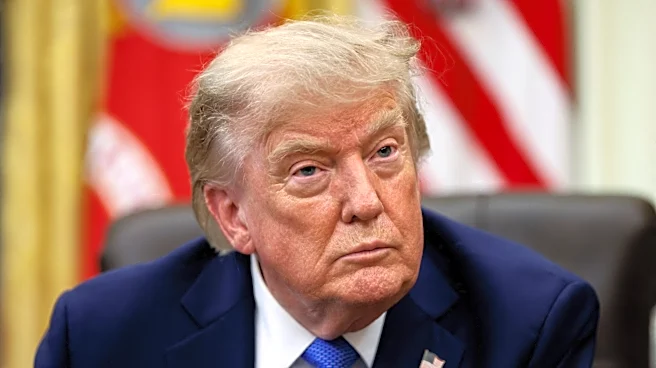
President Trump cast his vote by mail in Florida's Republican primary, a move that comes despite his repeated public denunciations of mail-in voting as 'inherently corrupt' and highly susceptible to fraud. Palm Beach County voting records indicate that President Trump requested
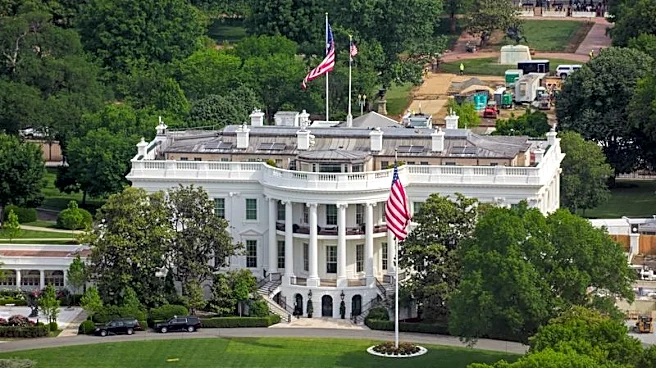
a ballot in late July and returned it last week for the primary elections in his adopted home state. This is not the first instance of President Trump utilizing mail-in voting; he previously voted by mail in Palm Beach County in 2020 and again in a Florida special election earlier this year. Following the latter vote, he defended his personal use of the system while reiterating his broader opposition, stating, 'No, I think mail-in voting is a terrible thing. I think if you vote, you should go.' White House spokeswoman Olivia Wales clarified that President Trump's use of mail-in ballots aligns with exceptions outlined in the SAVE America Act, which he supports. These exceptions permit mail-in voting for reasons such as illness, disability, military service, or travel, distinguishing it from universal mail-in voting, which he opposes due to fraud concerns. The White House stated that President Trump, as a resident of Palm Beach, participates in Florida elections but primarily resides at the White House in Washington D.C., making his mail-in vote a 'non-story' in their view.
Why It's Important?
President Trump's actions highlight a significant political and policy debate surrounding election integrity and voting methods in the United States. His consistent rhetoric against mail-in voting, often linking it to unsubstantiated claims of fraud in the 2020 presidential election, has fueled distrust in the electoral process among a segment of the population. Simultaneously, his personal use of the system he criticizes creates a perceived contradiction that could impact public perception of his stance and the broader Republican platform on election reform. The SAVE America Act, which President Trump is advocating for, seeks to impose stricter identification and citizenship requirements and significantly restrict mail voting. This legislative push, alongside his administration's efforts to revive parts of an executive order on election procedures through the Supreme Court, underscores a broader Republican strategy to tighten voting rules. The debate over mail-in voting has implications for voter access, particularly for those who may face challenges voting in person due to age, disability, or travel. The outcome of these legislative and judicial efforts could reshape how millions of Americans cast their ballots in future elections, potentially affecting voter turnout and the demographic composition of the electorate.
What's Next?
President Trump is actively pressing Congress to pass the SAVE America Act, which aims to significantly restrict mail voting and impose tougher identification and citizenship requirements. Concurrently, his administration is seeking Supreme Court intervention to reinstate elements of an executive order on election procedures that were previously blocked by lower courts. These efforts indicate a continued push to reform election laws at both federal and judicial levels. The Florida primary, where President Trump cast his mail-in ballot, includes the Republican contest to succeed term-limited Governor Ron DeSantis, with President Trump endorsing congressman Byron Donalds. The results of this primary, and the broader midterm elections in November, will be closely watched as they could influence the political landscape and the momentum for future election reform initiatives. The ongoing debate surrounding mail-in voting is likely to remain a prominent issue in political discourse, with potential for further legislative battles and legal challenges. Stakeholders, including political leaders, advocacy groups, and civil society organizations, will continue to monitor and react to developments in election law and practice, particularly as the 2024 presidential election cycle approaches.
Beyond the Headlines
The apparent discrepancy between President Trump's public condemnation of mail-in voting and his personal use of it raises deeper questions about political messaging, consistency, and the interpretation of rules. This situation could be viewed as a strategic maneuver to leverage existing legal provisions while simultaneously advocating for their reform, or it could be perceived as hypocrisy, depending on one's political perspective. The White House's explanation, citing exceptions for travel and other circumstances, attempts to reconcile this apparent contradiction by framing President Trump's actions within the bounds of the very legislation he supports. However, this distinction may not fully address the concerns of critics who argue that such actions undermine public trust in the electoral system. The broader implications extend to the ongoing polarization of American politics, where issues like voting methods become highly contentious and symbolic. The debate also touches upon the evolving nature of democratic processes in the digital age, where the balance between accessibility, security, and public confidence in elections is constantly being negotiated. This scenario highlights the complexities of political leadership in an era of heightened scrutiny and rapid information dissemination, where leaders' actions are often analyzed through multiple lenses.