



What's Happening?
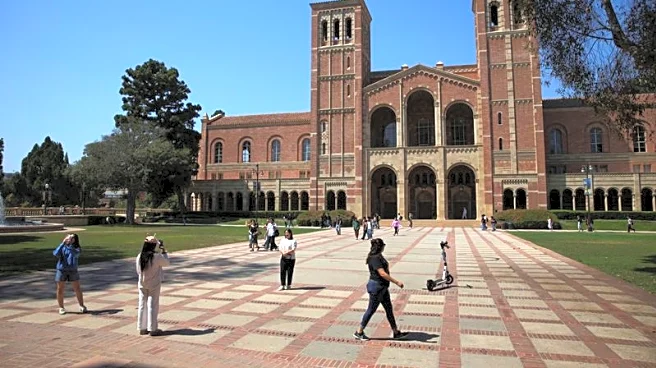
Recent revelations about Jeffrey Epstein's ties with several academic institutions have underscored the importance of rigorous donor screening processes at universities. Institutions like Yale, Columbia, and UCLA have faced scrutiny over faculty members'
connections to Epstein, leading to resignations and leaves of absence. The University of Arizona canceled a science conference due to similar concerns. The case has prompted discussions on the ethical standards of accepting donations, with experts emphasizing the need for universities to balance the pressure to secure funding with maintaining ethical integrity. Federal funding remains the largest source of university research funding, but private donations, which account for a smaller percentage, are crucial yet fraught with potential conflicts of interest.
Why It's Important?
The Epstein case highlights the ethical dilemmas universities face in securing funding. As federal funding becomes increasingly competitive, universities often rely on private donations to support research and operations. However, the need for funding must be balanced with ethical considerations to avoid reputational damage and ensure academic integrity. The case has prompted calls for stricter donor screening processes to prevent associations with morally compromised individuals. This situation underscores the broader challenge of maintaining ethical standards in higher education funding, which is critical for preserving public trust and the credibility of academic institutions.
What's Next?
In response to the Epstein case, universities are likely to implement more stringent donor screening policies. This may include comprehensive background checks for all donations, regardless of size, and increased training for faculty and staff on ethical fundraising practices. Institutions may also revise their policies to prevent direct donor engagement by faculty members, ensuring that all donations are processed through official channels. These measures aim to prevent future ethical breaches and protect the integrity of academic institutions.