
What's Happening?
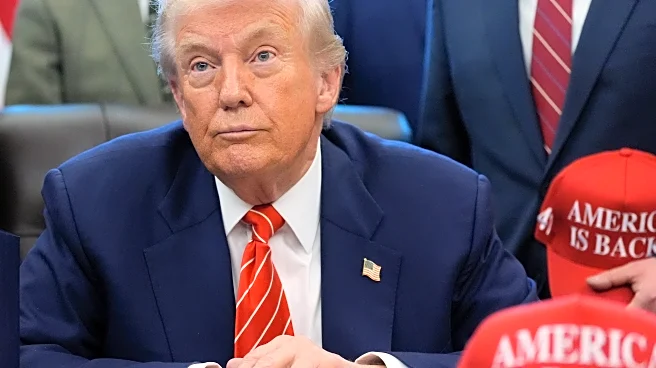
President Donald Trump has issued the first vetoes of his second term, rejecting two bills that had garnered bipartisan support in Congress. The first bill, known as the Finish the Arkansas Valley Conduit Act, aimed to complete a pipeline project to deliver
clean water to southeastern Colorado. Despite passing both the House and Senate by voice vote, Trump vetoed the measure, citing excessive costs and prolonged construction timelines. The bill's sponsor, Rep. Lauren Boebert, R-Colo., expressed her discontent on social media, indicating the issue is not resolved. Colorado Senators Michael Bennet and John Hickenlooper criticized the veto, with Hickenlooper urging Congress to override it. The second vetoed bill, the Miccosukee Reserved Area Amendments Act, sought to expand the Miccosukee Reserved Area in Florida to include part of the Everglades National Park. Trump accused the Miccosukee Tribe of obstructing immigration policies, a claim that was not immediately addressed by the bill's sponsor, Rep. Carlos Gimenez, R-Fla.
Why It's Important?
These vetoes highlight President Trump's continued influence over legislative processes and his administration's fiscal priorities. The rejection of the pipeline bill affects rural communities in Colorado, potentially delaying access to clean water, which could have significant public health and economic implications. The veto of the Miccosukee bill underscores ongoing tensions between federal policies and tribal sovereignty, particularly concerning land use and immigration. Trump's actions may set a precedent for how similar issues are handled in the future, affecting stakeholders ranging from local governments to indigenous tribes. The bipartisan nature of the bills suggests a rare consensus in Congress, and the vetoes could lead to further political polarization.
What's Next?
The immediate next step involves potential congressional action to override the vetoes, which would require a two-thirds majority in both the House and Senate. Given the bipartisan support for the bills, there is a possibility that Congress might succeed in overturning the vetoes. This situation could also prompt further discussions on federal spending priorities and the balance of power between the executive branch and Congress. Additionally, the affected communities and stakeholders, such as the Miccosukee Tribe, may seek alternative avenues to address their concerns, potentially leading to legal challenges or new legislative proposals.