







What's Happening?
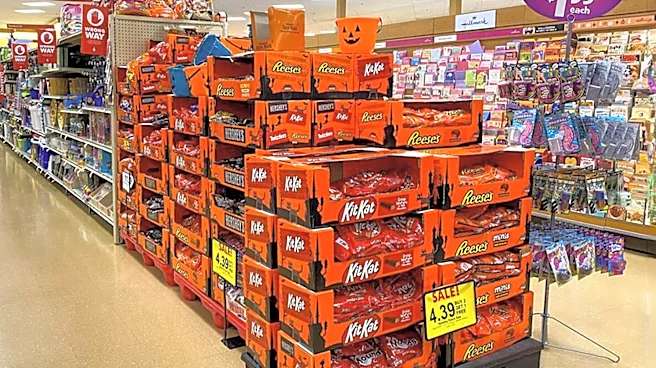
Halloween shoppers are facing higher candy prices this year, with the Consumer Price Index for candy and chewing gum rising 7.7% in September compared to the previous year. This increase is attributed to several factors, including elevated sugar and cocoa
costs, tariffs, packaging expenses, and transportation costs. The U.S. employs a tariff-rate quota system for sugar imports, which supports domestic producers but can lead to higher costs for food manufacturers and consumers. A 2023 U.S. Government Accountability Office report estimated this federal sugar program costs U.S. consumers and manufacturers an additional $2.5 billion to $3.5 billion annually. Cocoa prices, though down from recent highs, remain elevated due to past crop problems in West Africa. Packaging costs, particularly for aluminum, also contribute to the overall expense, further pressuring candy manufacturers.
Why It's Important?
The surge in candy prices directly impacts U.S. consumers, particularly during seasonal events like Halloween, where national spending on candy is forecast to reach $4.1 billion. This situation highlights the broader economic pressures on the food manufacturing sector, where global commodity prices, trade policies, and supply chain costs converge to affect everyday consumer goods. For lower-income households, these price increases can strain budgets, forcing them to seek ways to economize, such as comparing prices, choosing different brands, or buying smaller quantities. The federal sugar program, designed to protect domestic producers, is also under scrutiny for its estimated net economic loss to the U.S. economy, raising questions about the balance between supporting domestic industries and consumer affordability.
What's Next?
As Halloween approaches, consumers will likely adjust their purchasing habits, seeking value by comparing cost per piece rather than just package price, and opting for bulk purchases or less expensive brands. Candy manufacturers may continue to explore strategies to manage costs, such as adjusting recipes to use less cocoa or alternative ingredients, as seen with past controversies like Hershey's Reese's products. The industry will closely monitor consumer response to these price hikes to gauge their impact on sales and demand. Ongoing discussions about U.S. sugar import policies and global commodity market fluctuations will continue to influence future candy pricing and availability.
Beyond the Headlines
The rising cost of candy reflects a complex interplay of global economic forces, agricultural policies, and supply chain dynamics. Beyond the immediate impact on Halloween budgets, these price increases underscore the vulnerability of food supply chains to climate events in key producing regions, such as West Africa for cocoa. The debate surrounding the U.S. sugar program also highlights the broader tension between protectionist trade policies and consumer welfare. As manufacturers adapt by altering ingredients or recipes, there are potential implications for product quality and consumer perception, as evidenced by past consumer reactions to recipe changes. This situation serves as a microcosm of how global economic shifts and domestic policies translate into tangible price changes for everyday consumer goods.