








What's Happening?
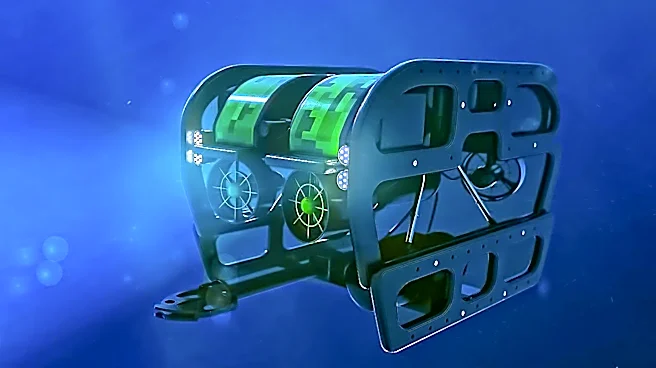
Australian military officials have revealed some of the payloads for the Anduril-developed Ghost Shark extra-large autonomous underwater vehicles (XLAUVs) for the Royal Australian Navy. At an official unveiling in Sydney, three Ghost Shark payloads were
showcased: sea mines, a swarm of Altius-600 loitering munitions, and logistics supply caches. This means two of the three payloads are kinetic effectors, giving the Ghost Shark significant offensive capabilities. A single XLAUV can clandestinely deploy a dozen sea mines, potentially in maritime chokepoints during a conflict, while the Altius weapons can perform both surveillance and strike missions. The modular design of these platforms allows for a range of different payloads customized to mission requirements. Minister for Defence Industry Pat Conroy stated that Ghost Sharks can deploy from shipping containers, ships, or wharves, creating uncertainty for adversaries. The first Ghost Shark was delivered to the Australian Navy for testing and acceptance in early 2026.
Why It's Important?
While this development is centered in Australia, it has significant implications for U.S. defense strategy and naval operations, particularly in the Indo-Pacific region. The U.S. and Australia are key allies, and advancements in Australian defense capabilities directly contribute to regional security, which is a critical interest for the U.S. The Ghost Shark's ability to deploy sea mines and loitering munitions enhances anti-access/area denial (A2/AD) capabilities, which could be crucial in deterring potential adversaries. The concept of autonomous underwater vehicles (AUVs) with offensive payloads represents a growing trend in naval warfare, and the U.S. Navy is also investing in similar technologies. This development could inform U.S. procurement decisions, joint military exercises, and strategic planning, especially as the U.S. seeks to maintain its naval superiority and project power in contested waters. The modular design also offers flexibility, allowing for rapid adaptation to evolving threats, a lesson that could be applied to U.S. defense programs.
What's Next?
The Australian Navy will continue testing and accepting the Ghost Shark XLAUVs, with more payloads likely to be developed, including lightweight and heavyweight torpedoes, and electronic warfare capabilities. The success of these autonomous systems could accelerate their integration into broader naval strategies and potentially lead to increased collaboration with U.S. defense contractors and military forces. Joint exercises between the U.S. and Australia may incorporate these XLAUVs to test their effectiveness in various operational scenarios. The development also signals a shift towards uncrewed systems filling capability gaps, especially as Australia awaits nuclear-powered submarines. This trend could influence U.S. defense spending and research priorities, with a greater emphasis on autonomous platforms for undersea warfare and seabed operations. The deployment of 'dozens and dozens' of these XLAUVs will significantly enhance Australia's maritime defense posture, contributing to a stronger allied presence in the Indo-Pacific.
Beyond the Headlines
The unveiling of the Ghost Shark's offensive payloads raises profound ethical and strategic questions about the future of autonomous weapons systems. The ability of XLAUVs to clandestinely deploy weapons without direct human intervention in real-time operations challenges traditional notions of warfare and accountability. This development could lead to a re-evaluation of international laws and norms regarding autonomous weapons. The 'question marks in adversaries’ minds' that Minister Conroy mentioned highlight the psychological and deterrent effects of such advanced capabilities, but also the potential for miscalculation and escalation. The long-term implications include a future where naval conflicts are increasingly fought by intelligent machines, demanding a robust ethical framework and clear rules of engagement. This technological leap is not just about military hardware; it's about shaping the very nature of future conflicts and the role of human decision-making in them, with significant global security ramifications.