


What's Happening?
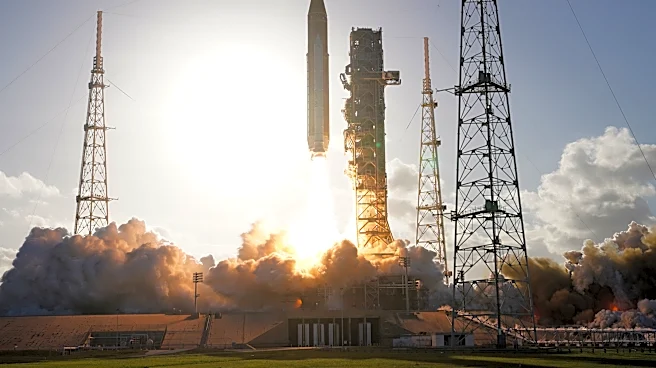
The Artemis II mission, led by Commander Reid Wiseman, is set to embark on a significant lunar mission. Wiseman described the first day as 'crazy' and emphasized the 24 hours of intense work that the crew will face as they begin their journey. The mission is part
of NASA's ongoing efforts to explore the moon and beyond, building on the success of previous Artemis missions. The crew's tasks will include critical decision-making and operations essential for the mission's success. This mission marks a pivotal step in NASA's long-term goals of establishing a sustainable human presence on the moon and preparing for future missions to Mars.
Why It's Important?
The Artemis II mission is crucial for advancing human space exploration. It represents a significant step in NASA's Artemis program, which aims to return humans to the moon and eventually send astronauts to Mars. The mission's success could pave the way for more ambitious space exploration endeavors, potentially leading to scientific discoveries and technological advancements. Additionally, the mission underscores the importance of international collaboration in space exploration, as NASA partners with other space agencies and private companies to achieve its goals. The outcomes of this mission could influence future policies and funding for space exploration initiatives.
What's Next?
Following the initial phase of the Artemis II mission, the crew will continue their journey to the moon, conducting various scientific experiments and tests. The mission's progress will be closely monitored by NASA and its partners, with potential adjustments made as needed to ensure success. The results of this mission will inform the planning and execution of future Artemis missions, including the eventual goal of landing humans on Mars. Stakeholders, including government agencies, private companies, and international partners, will be watching closely to assess the mission's impact on future space exploration strategies.