



What's Happening?
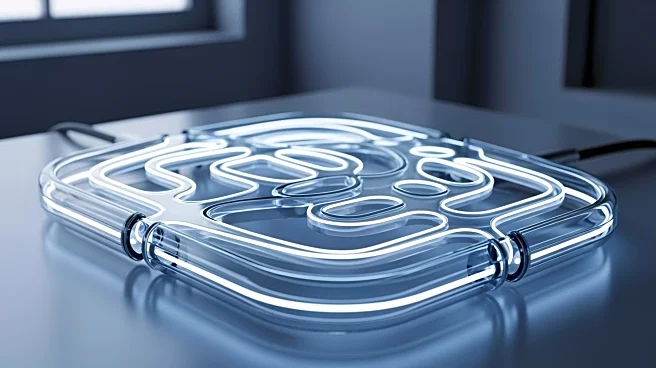
A new medical device, the A-Maze-Ox oxygenator, has been developed to address the unique needs of extremely preterm infants. This device is designed to adjust its gas-exchange area to accommodate the growing oxygen demands of infants born as early as 24
weeks of gestational age. The A-Maze-Ox features a cylindrical design with wound hollow fibers, allowing it to 'grow' with the infant by increasing the blood flow through its compartments as needed. This innovation aims to provide a stable and efficient oxygenation process over a four-week treatment period, during which an infant's weight can double. The device's design minimizes the need for device changes, which can lead to complications such as hemodilution and hypoxemia. The A-Maze-Ox has been tested for its gas transfer performance and pressure loss, showing promising results in maintaining adequate oxygenation levels for preterm infants.
Why It's Important?
The development of the A-Maze-Ox oxygenator is significant as it addresses a critical need in neonatal care for extremely preterm infants, who often face challenges with oxygenation due to underdeveloped lungs. By providing a device that can adapt to the infant's growth and changing physiological needs, the A-Maze-Ox could improve survival rates and reduce complications associated with traditional oxygenation methods. This innovation could lead to better health outcomes for preterm infants, potentially reducing the length of hospital stays and associated healthcare costs. The device's ability to maintain stable oxygenation without frequent changes also minimizes the risk of infection and other complications, offering a safer alternative for neonatal intensive care units.
What's Next?
Further clinical trials and evaluations are likely needed to validate the A-Maze-Ox's effectiveness and safety in real-world settings. If successful, the device could be integrated into neonatal care protocols, providing a new standard for treating extremely preterm infants. The medical community may also explore additional applications of this technology for other patient groups requiring long-term oxygenation support. Regulatory approvals and manufacturing scalability will be critical steps in bringing the A-Maze-Ox to market, potentially influencing future innovations in neonatal care and medical device design.
Beyond the Headlines
The introduction of the A-Maze-Ox oxygenator could have broader implications for the medical device industry, particularly in the design of adaptive technologies that cater to specific patient needs. This development highlights the importance of interdisciplinary collaboration between engineers, neonatologists, and researchers in creating solutions that address complex medical challenges. Additionally, the device's success could spur further research into customizable medical devices, paving the way for personalized medicine approaches in various fields.