






What's Happening?
A recent study on organophosphate esters (OPEs), a class of toxic flame retardants, has uncovered that these chemicals behave differently in marine versus freshwater environments. The research indicates that the same OPE compound can dilute in one ecosystem
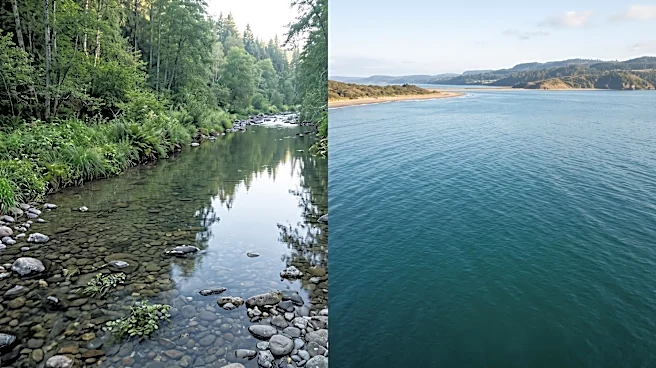
while concentrating in another, suggesting that the environmental fate of these pollutants is highly dependent on their location. This finding challenges previous assumptions about how these chemicals disperse and accumulate in aquatic systems. The study highlights that factors such as salinity, temperature, and the presence of different microbial communities in marine and freshwater bodies can influence the degradation and bioaccumulation of OPEs. This differential behavior means that risk assessments for these contaminants need to be more nuanced and location-specific, rather than applying a one-size-fits-all approach. The implications extend to public health, as the safety of consuming fish from rivers may differ significantly from fish caught in nearby bays, even if both areas are exposed to the same pollutants.
Why It's Important?
This study is crucial because it reveals a significant gap in current environmental risk assessment models for toxic chemicals like OPEs. The understanding that a pollutant's behavior can drastically change between freshwater and marine environments means that existing regulations and monitoring strategies might be insufficient or misdirected. For U.S. industries, particularly those involved in manufacturing products containing flame retardants or those responsible for wastewater treatment, this research underscores the need for more sophisticated waste management and disposal practices. Public health officials will need to re-evaluate advisories regarding seafood consumption, potentially issuing more specific guidelines based on the origin of the fish. Economically, this could impact fishing industries, as certain areas might be deemed less safe for harvesting, leading to shifts in market supply and demand. Furthermore, it emphasizes the interconnectedness of ecosystems and the complex pathways through which pollutants can affect human health and the environment.
What's Next?
The findings of this study are likely to prompt a re-evaluation of environmental monitoring protocols and risk assessment methodologies for organophosphate esters and potentially other persistent organic pollutants. Regulatory bodies, such as the Environmental Protection Agency (EPA), may consider developing more specific guidelines for assessing OPE contamination in different aquatic environments. Further research will likely focus on identifying the precise mechanisms driving the differential behavior of OPEs in marine versus freshwater systems, including the roles of microbial degradation, sediment interaction, and bioaccumulation in various aquatic species. This could lead to the development of more targeted remediation strategies for contaminated sites. Public health organizations may also update their advisories on fish consumption, providing more detailed information based on the type of water body from which fish are sourced. Industries that use or produce OPEs may face increased scrutiny and pressure to develop safer alternatives or improve their waste management practices to prevent environmental release.
Beyond the Headlines
The study's implications extend beyond immediate environmental policy, touching upon broader ethical and scientific considerations. It highlights the complexity of environmental chemistry and the limitations of simplified models in predicting pollutant behavior. Ethically, it raises questions about environmental justice, as communities relying on local water sources for food or recreation might be disproportionately affected by these localized concentrations of toxins. Scientifically, it underscores the importance of interdisciplinary research, combining chemistry, ecology, and toxicology to understand complex environmental problems. This research could also catalyze a shift towards more dynamic and adaptive environmental management strategies that account for ecosystem-specific variables rather than relying on broad generalizations. The long-term shift could be towards a more granular approach to environmental protection, where policies are tailored to the unique characteristics of specific aquatic environments, leading to more effective and equitable outcomes.