






What's Happening?
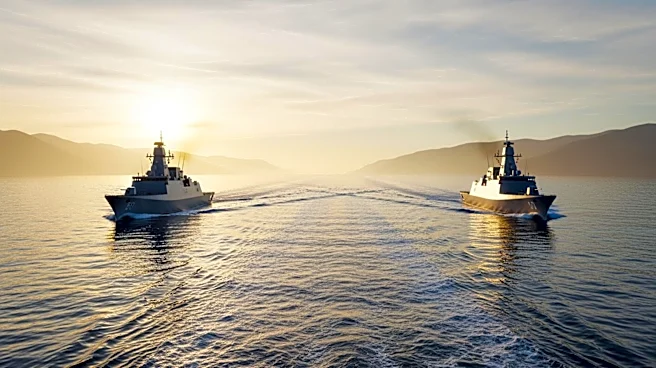
U.S. Central Command (CENTCOM) has commenced operations to clear mines in the Strait of Hormuz, a critical international sea passage. On April 11, two U.S. Navy guided-missile destroyers, USS Frank E. Peterson and USS Michael Murphy, transited the strait
and operated in the Arabian Gulf. This mission is part of a broader effort to remove sea mines laid by Iran’s Islamic Revolutionary Guards Corps. Admiral Brad Cooper, commander of CENTCOM, stated that the operation aims to establish a new safe passage for maritime industry, promoting the free flow of commerce. The Strait of Hormuz is vital for regional and global economic prosperity, and additional U.S. forces, including underwater drones, are expected to join the clearance efforts soon.
Why It's Important?
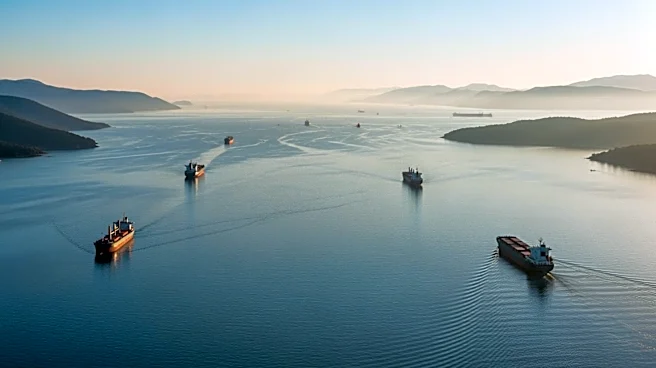
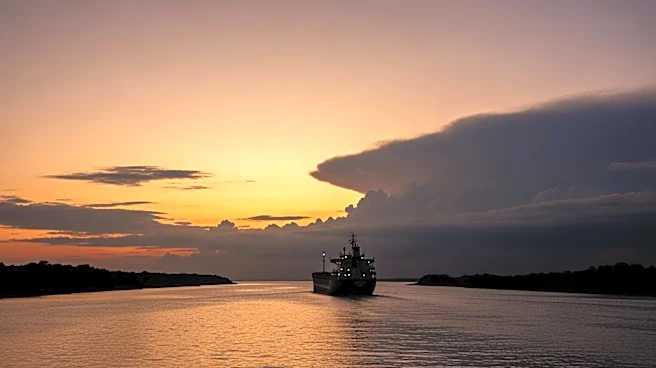
The Strait of Hormuz is a strategic chokepoint for global oil shipments, with a significant portion of the world's petroleum passing through it. Ensuring its safety and accessibility is crucial for maintaining stable oil prices and uninterrupted trade. The mine clearance operation by U.S. forces is a proactive measure to prevent disruptions in maritime traffic, which could have severe economic repercussions. By securing this passage, the U.S. aims to safeguard international trade routes and reinforce its commitment to regional security. The operation also serves as a deterrent against potential threats from Iran, showcasing U.S. military capabilities and readiness to protect vital interests.
What's Next?
As the mine clearance operation progresses, CENTCOM plans to share the newly established safe passage with the maritime industry, encouraging the resumption of normal trade activities. The involvement of underwater drones indicates a sophisticated approach to mine detection and removal, potentially speeding up the process. The international community, particularly countries reliant on oil imports through the Strait of Hormuz, will be closely monitoring the situation. Future diplomatic engagements may arise to address security concerns and ensure long-term stability in the region. The U.S. may also seek to strengthen alliances with regional partners to enhance collective security measures.