






What's Happening?
A Sherpa guide named Dawa Sherpa was found crawling towards the base camp on Mount Everest after being missing for a week. He was last seen on May 29, descending the mountain, but did not reach the base camp, although his client did. Dawa was discovered
by a cleaning crew near the Khumbu Icefall, just above the base camp. He was quickly carried to safety, provided with food and water, and then flown to HAMS Hospital in Kathmandu. His family, who had already begun funeral rituals, was overjoyed to learn of his survival. The delay in organizing a search team was not explained, but helicopters were eventually dispatched to search for him. Dawa's survival is considered miraculous by the mountaineering community.
Why It's Important?
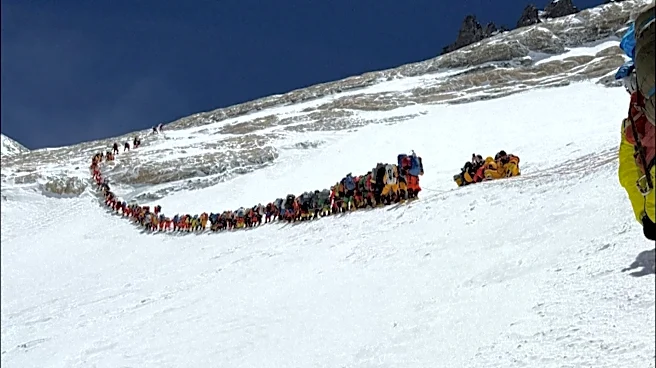
The rescue of Dawa Sherpa highlights the extreme conditions and dangers faced by climbers and guides on Mount Everest. The incident underscores the risks involved in high-altitude expeditions, even for experienced guides like Dawa. His survival story is a testament to the resilience and toughness of Sherpas, who are integral to the climbing industry in Nepal. This event also raises questions about the preparedness and response times of rescue operations on Everest, which could impact future safety protocols and expedition planning. The incident may prompt discussions on improving support and insurance mechanisms for guides and climbers.
What's Next?
Following Dawa's rescue, there may be increased scrutiny on the procedures and timeliness of rescue operations on Mount Everest. The mountaineering community and expedition companies might review and potentially revise their safety and emergency response protocols. Additionally, there could be discussions about the responsibilities of expedition companies in ensuring the safety of their guides and clients. The incident might also lead to calls for better insurance coverage and support systems for Sherpas, who play a crucial role in the climbing industry.