




What's Happening?
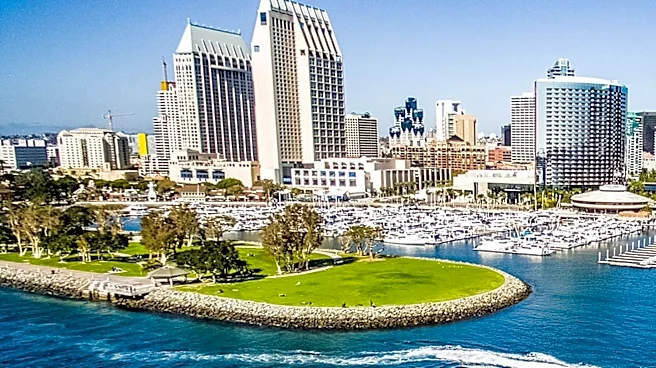
A 16-inch water pipe burst on Pacific Highway in San Diego, causing extensive flooding near Seaport Village and forcing the closure of six businesses at The Headquarters at Seaport during the dinner rush. The incident, which occurred on a Tuesday afternoon,
sent water flowing from the Seaport Village entrance to the boardwalk by the bay. City crews, including Senior Public Information Officer Ramon Galindo, were on site, working to access the break by opening up the street with heavy machinery. A portion of Harbor Drive was also closed due to the flooding. While the immediate flooding has cleared, crews are expected to continue working through the night to investigate the cause of the break. Galindo noted that while most water main breaks are attributed to aging infrastructure, the pipe in question appeared to be made of PVC, a more modern material typically expected to have a longer lifespan. Water service was temporarily shut off in the affected area.
Why It's Important?
This water main break highlights the vulnerability of urban infrastructure, even with modern materials like PVC. The closure of multiple businesses during peak hours, such as The Cheesecake Factory and Eddie V's Prime Seafood Restaurant, demonstrates the immediate economic impact on local establishments and the disruption to consumer activity. Such incidents can lead to significant financial losses for businesses due to lost revenue and potential damage. Furthermore, the closure of major roadways like Pacific Highway and Harbor Drive creates traffic congestion and inconvenience for residents and tourists, affecting daily commutes and local commerce. The need for extensive repairs and investigation also diverts city resources, potentially impacting other public services. The incident underscores the ongoing challenge cities face in maintaining and upgrading their essential services to prevent such disruptive events.
What's Next?
City crews will continue their investigation into the cause of the PVC pipe burst, working through the night to understand why a relatively modern material failed. This investigation will likely involve assessing the pipe's installation, material quality, and any external factors that might have contributed to the rupture. Repairs to the water main and the affected roadways will be a priority, with efforts focused on restoring full service and accessibility to the area. Businesses that were forced to close will need to assess any damage and determine when they can safely reopen, potentially facing further financial losses depending on the extent of the disruption. The city may also review its infrastructure maintenance protocols and material selection processes in light of this incident to prevent future occurrences.
Beyond the Headlines
The incident raises broader questions about the resilience of urban infrastructure and the effectiveness of modern materials in preventing such failures. While PVC is generally considered durable, its failure in this instance could prompt a re-evaluation of material specifications, installation practices, and inspection routines for water systems. There's also an underlying concern about the 'invisible' infrastructure that supports daily life; when it fails, the ripple effects on local economies, public convenience, and city resources become immediately apparent. This event could serve as a case study for urban planners and engineers to refine strategies for infrastructure longevity and disaster preparedness, emphasizing the need for continuous monitoring and proactive maintenance to mitigate the impact of unexpected failures.