


What's Happening?
The European Space Agency (ESA) and NASA have reported the successful application of an AI tool named AnomalyMatch, which analyzed nearly 100 million image cutouts from the Hubble Legacy Archive. This AI-assisted method identified approximately 1,300
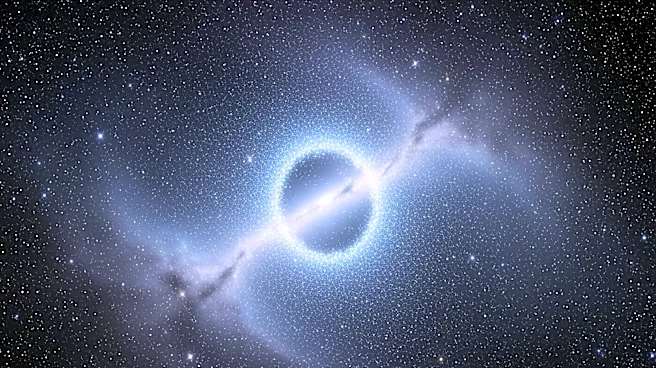
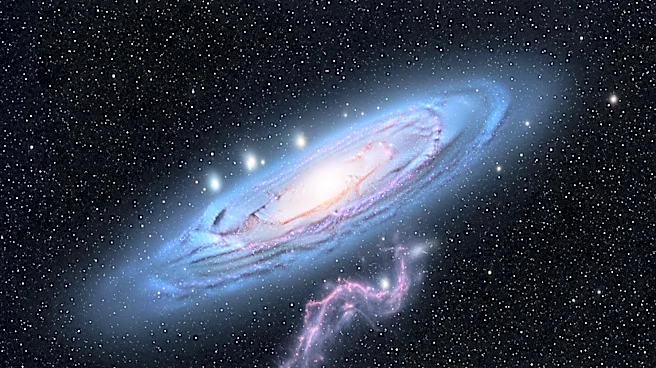
anomalous images, totaling around 1,400 unique objects, with over 800 of these not previously documented in scientific literature. The anomalies include gravitational lenses, galaxy mergers, and other unusual cosmic phenomena. The AI tool ranks images based on their anomalous features, allowing astronomers to efficiently review and catalog these findings.
Why It's Important?
The use of AI in analyzing vast astronomical data sets represents a significant advancement in space research. By automating the identification of anomalies, the tool reduces the workload on astronomers, allowing them to focus on interpreting and following up on the most promising findings. This could accelerate discoveries in astrophysics and enhance our understanding of the universe. The identification of previously undocumented objects could lead to new insights into cosmic phenomena and the evolution of galaxies.
What's Next?
Following the identification of these anomalies, astronomers will likely conduct further investigations to understand the nature and significance of these objects. The findings could prompt additional studies and observations using other telescopes and instruments. The success of AnomalyMatch may encourage the development and deployment of similar AI tools in other areas of space research, potentially leading to more efficient data analysis and discovery processes.