







What's Happening?
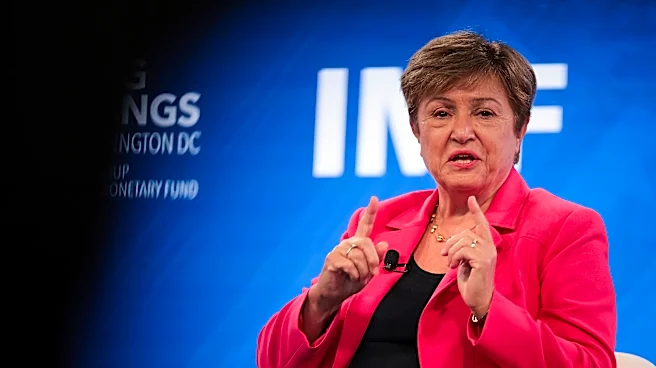
The Cabinet of Ministers is actively preparing the draft law 'On the State Budget for 2027' for its second reading, with a strong emphasis on incorporating the requirements of the International Monetary Fund (IMF). Prime Minister Serhii Koretskyi reported
that a meeting was held to process the budget conclusions adopted by the Verkhovna Rada after the first reading. The government's priorities for this wartime budget remain consistent: financing security and defense, ensuring the state's financial resilience, and maintaining an adequate level of social support. A crucial aspect is ensuring that the budget aligns with the macroeconomic forecast and the cooperation program established with the IMF. The Verkhovna Rada initially supported the 2027 budget on October 28 with 239 votes, focusing on defense, social payments, and military personnel pay increases.
Why It's Important?
The meticulous preparation of the 2027 budget, particularly its alignment with IMF requirements, is critical for the nation's financial stability and its relationship with international financial institutions. Adhering to IMF guidelines is often a prerequisite for receiving crucial financial aid and maintaining investor confidence, which is especially vital during wartime. The budget's focus on defense, social payments, and military salaries reflects the immediate and pressing needs of the country, indicating a strategic allocation of resources to address both security challenges and citizen welfare. The involvement of the IMF in the budget preparation process underscores the international community's role in supporting the nation's economic resilience and its efforts to navigate a challenging geopolitical landscape. This alignment is essential for securing continued international support and ensuring the long-term economic viability of the state.
What's Next?
The Cabinet of Ministers is working promptly to prepare a high-quality document for the second reading of the 2027 budget. The clear deadlines indicate an expedited process to finalize the budget, which will then be presented to the Verkhovna Rada for further consideration and approval. The ongoing cooperation with the IMF suggests that the final budget will reflect a balance between national priorities and international financial best practices. The outcome of the second reading will be crucial for the nation's financial planning and its ability to secure necessary funding and support. The government's commitment to meeting IMF requirements is a key indicator of its dedication to fiscal responsibility and its efforts to maintain international financial partnerships.
Beyond the Headlines
The integration of IMF requirements into the national budget highlights a broader trend of global financial interdependence, where national fiscal policies are often shaped by international agreements and conditions. This process can lead to enhanced financial discipline and transparency, but it also raises questions about national sovereignty in economic decision-making. For a nation in a wartime context, the reliance on international financial support, and the conditions attached to it, can have profound implications for its long-term development and recovery. The budget's focus on defense and social welfare, while necessary, also points to the difficult trade-offs that must be made when resources are constrained and external pressures are high. This situation underscores the complex interplay between national security, economic policy, and international relations.