






What's Happening?
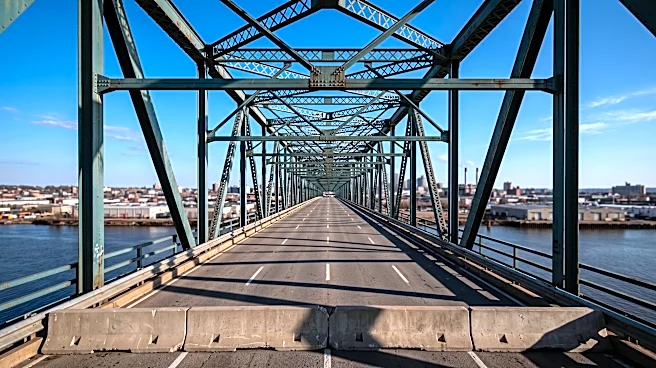
The Chicago Department of Transportation (CDOT) has announced that the Courtland Street Bridge will remain closed to vehicle traffic indefinitely. This decision comes as CDOT reevaluates the restoration project for the bridge. The department indicated
that the restoration process is anticipated to take several years, necessitating a prolonged closure for vehicles. During this extended period, CDOT will undertake a comprehensive environmental review, followed by detailed engineering and design work. The reevaluation suggests a more extensive and time-consuming process than initially projected, impacting local transportation and potentially requiring alternative routes for commuters and commercial traffic in the affected area.
Why It's Important?
The extended closure of the Courtland Street Bridge carries significant implications for Chicago's urban infrastructure and daily life. For residents and businesses in the vicinity, the prolonged closure will likely lead to increased commute times, rerouted traffic, and potential disruptions to local commerce. The reevaluation of the restoration project highlights the complexities and challenges associated with maintaining and upgrading aging urban infrastructure. This situation could also influence future infrastructure planning and budgeting within CDOT, potentially leading to a re-prioritization of bridge maintenance and repair projects across the city. The economic impact on local businesses, particularly those reliant on vehicle accessibility, could be substantial, affecting delivery schedules and customer access. Furthermore, the environmental review component underscores a growing emphasis on sustainable and impact-conscious urban development, which could set a precedent for similar projects in other U.S. cities.
What's Next?
CDOT's immediate next steps involve conducting the environmental review for the Courtland Street Bridge, which will be followed by the engineering and design phases. These stages are crucial for determining the scope, timeline, and cost of the eventual restoration. Local authorities will likely continue to monitor traffic patterns and implement mitigation strategies to alleviate congestion caused by the bridge closure. Public engagement and communication from CDOT will be essential to keep residents and businesses informed about the progress and any further adjustments to the timeline. Depending on the findings of the environmental review and engineering assessments, there could be revisions to the project's original plan, potentially leading to a more comprehensive or even a different approach to the bridge's future. Stakeholders, including local community groups and businesses, will be closely watching for updates and potential opportunities to provide input on the project's direction.
Beyond the Headlines
The indefinite closure of the Courtland Street Bridge and the reevaluation of its restoration project reflect a broader national challenge concerning aging infrastructure. Many U.S. cities face similar dilemmas with bridges, roads, and public transit systems that require significant investment and complex planning for repair or replacement. This situation in Chicago could serve as a case study for other municipalities grappling with infrastructure decay, emphasizing the need for proactive maintenance and long-term strategic planning rather than reactive measures. The environmental review aspect also points to an evolving standard in urban development, where ecological considerations are increasingly integrated into infrastructure projects. This could lead to more stringent environmental impact assessments for future urban renewal initiatives, potentially increasing project timelines and costs but ultimately aiming for more sustainable and resilient urban environments. The incident also highlights the critical role of local government agencies like CDOT in balancing public safety, economic impact, and environmental stewardship.