






What's Happening?
Colorado State University (CSU) is set to open its new Dawn and Susie Law Engineering Future Technologies building in the fall of 2028. This new facility is being constructed to meet LEED Gold standards, the second-highest tier for sustainability set by
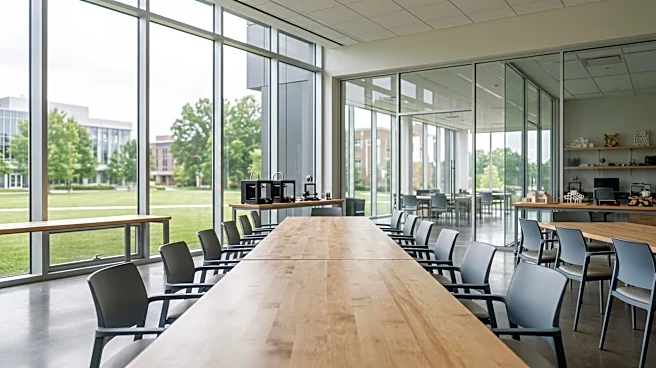
the United States Green Building Council. The building is designed to enhance the student experience within the College of Engineering and its collaborators, according to Thomas Bradley, the department head of systems engineering at CSU. It will feature classrooms, large collaborative workspaces, and a dedicated student success center specifically aimed at supporting first-generation students. Bradley noted that the current engineering building lacks adequate study and collaboration space, a deficiency the new building intends to address. The design also aims to make engineering work more visible, incorporating floor-to-ceiling windows in many areas to showcase student activities. Students taking non-engineering classes will also walk through creative workspaces on the first floor, integrating the engineering discipline more broadly into campus life.
Why It's Important?
The construction of CSU's Engineering Future Technologies building signifies a significant investment in modernizing engineering education and promoting sustainable development within U.S. universities. Achieving LEED Gold certification underscores a commitment to environmental responsibility, setting a precedent for future campus developments nationwide. The emphasis on collaborative workspaces and a dedicated student success center for first-generation students addresses critical needs in higher education, aiming to improve student retention and success, particularly for underrepresented groups in STEM fields. By making engineering work more visible through architectural design, the university seeks to inspire broader interest in engineering and foster interdisciplinary engagement. This initiative could serve as a model for other institutions looking to update their facilities, integrate sustainability, and create more inclusive and interactive learning environments, ultimately contributing to a more skilled and diverse workforce in critical technological sectors.
What's Next?
The Dawn and Susie Law Engineering Future Technologies building is scheduled to open in the fall of 2028. Leading up to its opening, CSU will likely focus on the final stages of construction, outfitting the interior with advanced equipment, and planning for the integration of the new spaces into the existing curriculum. The university will also need to develop programs and support systems for the dedicated student success center, particularly for first-generation students. Once operational, the building's impact on student collaboration, interdisciplinary studies, and overall academic performance will be closely monitored. Other universities may observe CSU's approach to sustainable design and collaborative learning spaces as they plan their own infrastructure projects. The success of this building could influence future funding decisions for educational facilities and the adoption of similar architectural and pedagogical strategies across the U.S. higher education landscape.
Beyond the Headlines
The design philosophy behind CSU's new engineering building, particularly its emphasis on visibility and integration, reflects a broader shift in educational architecture. By incorporating floor-to-ceiling windows that expose student activities, the building challenges the traditional insular nature of specialized academic departments. This transparency can foster a sense of community and demystify complex fields like engineering for the wider university population. It also subtly promotes accountability and pride in the work being done. The focus on supporting first-generation students through a dedicated success center addresses systemic inequities in higher education, acknowledging that academic success is not solely about intellectual capacity but also about access to resources and a sense of belonging. This holistic approach to facility design, combining sustainability, collaboration, and social equity, positions the building as more than just a structure; it becomes a statement about the university's values and its vision for the future of education and societal contribution.