



What's Happening?
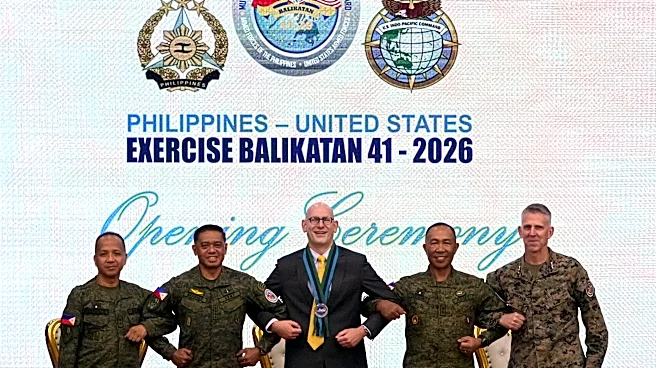
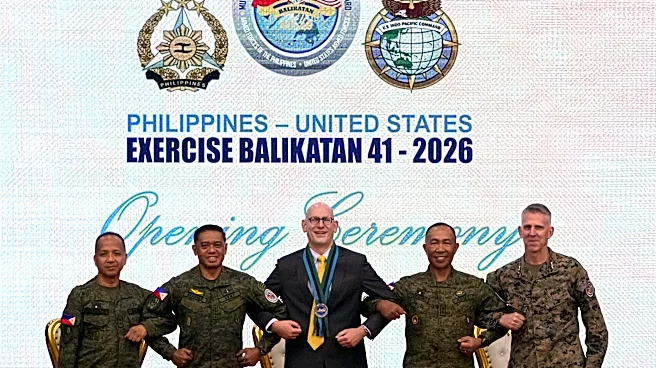
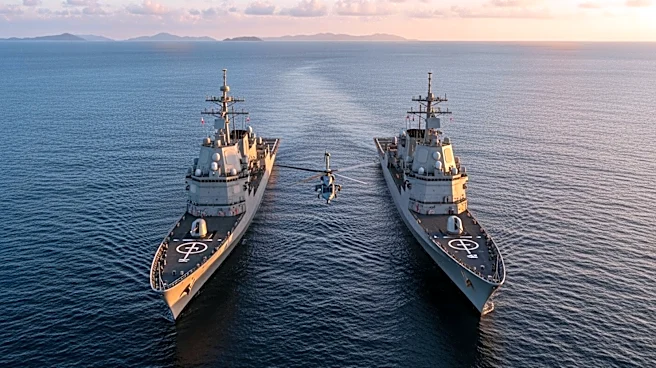
The United States and the Philippines have commenced their largest joint military exercises, known as Balikatan, involving over 17,000 troops from both nations, as well as participants from Japan, Australia, New Zealand, France, and Canada. The exercises, which
will last 19 days, include live-fire drills and are set against the backdrop of ongoing tensions in the Middle East. Notably, the exercises are taking place near the Taiwan Strait and the South China Sea, areas of strategic interest due to recent confrontations between Philippine and Chinese forces. The inclusion of Japanese forces marks a significant development, as Japan participates fully for the first time following a reciprocal access agreement. The exercises aim to enhance military cooperation and readiness among the participating nations.
Why It's Important?
These military exercises underscore the United States' commitment to its allies in the Indo-Pacific region, particularly amid rising tensions with China over Taiwan and the South China Sea. The involvement of multiple nations highlights a collective effort to ensure regional stability and deter potential aggression. For the Philippines, these exercises strengthen its defense capabilities and international alliances, which are crucial given its proximity to Taiwan and ongoing territorial disputes with China. The exercises also serve as a demonstration of military readiness and interoperability among allied forces, which is vital for maintaining a balance of power in the region.
What's Next?
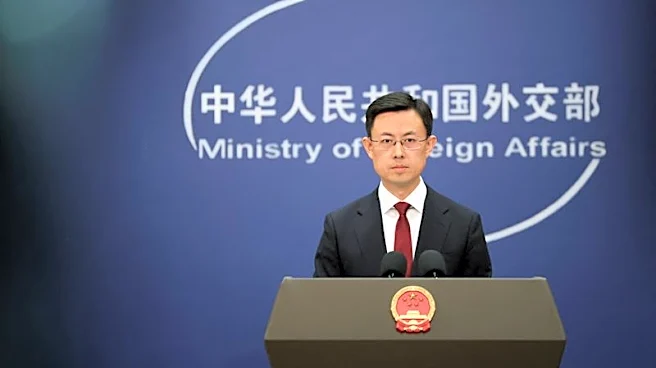
The exercises are likely to draw further criticism from China, which has already condemned them as provocative. The continuation of such military collaborations may lead to increased diplomatic tensions between China and the participating countries. Additionally, the exercises could prompt China to enhance its military presence in the region, potentially escalating the situation. The outcomes of these exercises will be closely monitored by regional and global powers, as they could influence future military and diplomatic strategies in the Indo-Pacific.