


What's Happening?
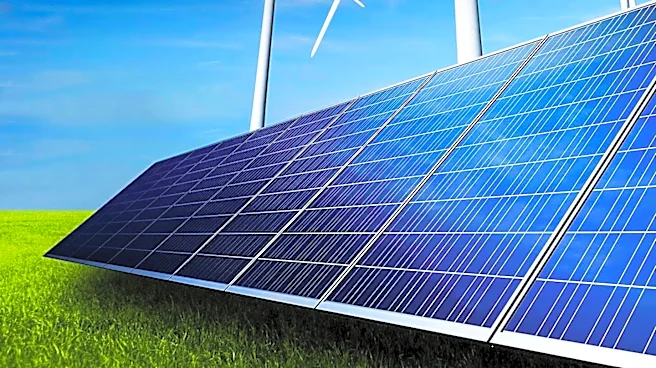
The International Union for Conservation of Nature (IUCN) and the Renewables Grid Initiative (RGI) have launched AGENT (Accelerating a Global Energy and Nature-positive Transition), an initiative aimed at accelerating the deployment of renewable energy,
electricity grids, and energy storage while simultaneously safeguarding biodiversity and ecosystems. AGENT seeks to ensure that local communities benefit from this energy transition. The initiative will bring together governments, cities, companies, grid operators, investors, civil societies, and Indigenous Peoples’ organizations. Its core objective is to integrate nature- and people-positive approaches into energy planning and infrastructure development, demonstrating that a rapid energy transition can be resilient, inclusive, and sustainable. This includes mobilizing US$30 billion for renewable energy and grid infrastructure under nature-positive criteria, conserving or improving the management of 10 million hectares of landscapes linked to these projects, and supporting 50 national or regional policy frameworks that incorporate early spatial planning and biodiversity data.
Why It's Important?
The AGENT initiative is crucial for addressing the dual challenges of climate change and biodiversity loss, particularly as countries aim to triple renewable energy capacity by 2030. By embedding nature and community considerations from the outset of energy projects, AGENT seeks to prevent the environmental degradation and social conflicts often associated with large-scale infrastructure development. This approach can lead to more sustainable and widely accepted renewable energy projects, reducing permitting delays and legal challenges. The initiative's focus on mobilizing significant investment under nature-positive criteria sets a new standard for responsible development, potentially influencing global financial flows towards more environmentally and socially conscious energy solutions. It highlights the interconnectedness of climate action, biodiversity conservation, and social equity in achieving a truly sustainable future.
What's Next?
AGENT will work towards several key deliverables by 2030, including mobilizing US$30 billion for nature-positive renewable energy and grid infrastructure, conserving or improving the management of 10 million hectares of landscapes, and supporting 50 policy and regulatory frameworks that integrate biodiversity and spatial planning. The initiative will establish a demand-led technical support facility to assist participating countries and partners with planning, permitting, project design, monitoring, and investment pipelines. It will also foster peer learning and knowledge exchange, with annual reporting aligned with national and international processes. The COP31 launch marks the beginning of a broader mobilization effort to identify champion countries, establish partnerships, and develop a pipeline of priority projects and financing opportunities, aiming to accelerate the delivery of nature-positive energy solutions globally.
Beyond the Headlines
The AGENT initiative represents a significant shift in how large-scale energy projects are conceived and implemented, moving beyond mere mitigation of environmental harm to actively seeking nature-positive outcomes. This approach challenges the traditional paradigm where environmental considerations are often an afterthought, instead positioning them as integral to project success and sustainability. The emphasis on early spatial planning, biodiversity-inclusive decision-making, and transparent stakeholder participation could set a precedent for infrastructure development across various sectors. Furthermore, by linking financial mobilization to credible nature-positive criteria, AGENT has the potential to reshape investment practices, encouraging a more holistic view of returns that includes ecological and social benefits alongside economic ones. This could lead to a more resilient and equitable global energy transition.