






What's Happening?
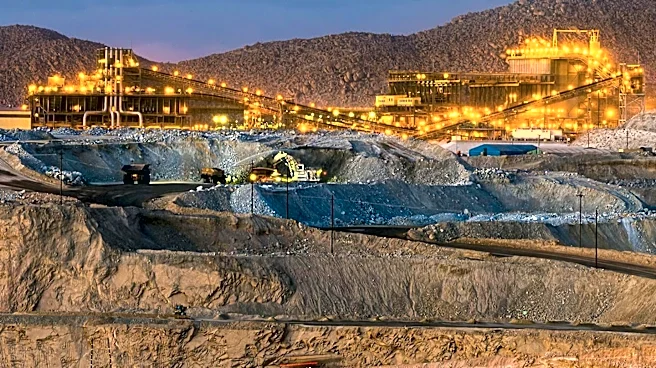
Western nations are encountering significant bottlenecks in rare earth processing, which are undermining their efforts to establish sovereign critical minerals supply chains. Despite increased investment in rare earth mining projects in North America,
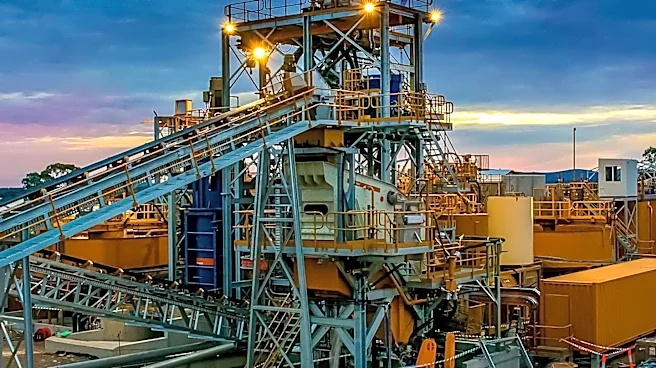
Europe, and Australia, the downstream processing infrastructure remains heavily concentrated in China. This creates a critical gap between mining raw materials and converting them into usable components for industries such as defense, clean energy, and automotive. Rare earth processing involves complex chemical separation, refining, and alloying, requiring specialized facilities, reagents, and a skilled workforce. The technical and environmental complexities, including the handling of hazardous chemicals and radioactive waste, make permitting and construction of such facilities protracted in Western jurisdictions. Furthermore, a significant knowledge gap exists due to the decline of extractive metallurgy programs and the retirement of experienced personnel in Western countries.
Why It's Important?
The rare earth processing bottleneck poses a substantial threat to the strategic intent of Western nations to achieve supply chain security. Without adequate processing capabilities, raw rare earth materials mined in Western countries often have to be sent to China for processing, negating the goal of reducing reliance on foreign sources. This vulnerability exposes critical sectors, including defense, electric vehicle manufacturing, and wind energy, to potential supply disruptions. Permanent magnets made from rare earth elements are essential components in military guidance systems, EV motors, and wind turbines. The lack of a reliable Western processing base introduces significant risks for manufacturers, impacting their ability to scale production and ensure the long-term availability of crucial components. This situation highlights a critical national security and economic challenge for the U.S. and its allies.
What's Next?
Western governments are responding to the processing gap with various policy measures, including grant funding, loan guarantees, offtake support, and international coordination frameworks. Several processing and refining facilities are currently under development across North America and Europe. However, these initiatives face long physical and regulatory timelines, meaning that significant commercial output from new facilities is unlikely in the near term. The processing gap is expected to remain a structural feature of Western supply chains for several years. Additionally, recycling and magnet-to-magnet recovery programs are being explored as supplementary pathways, but their current volumes are modest compared to primary demand. The ultimate success of Western rare earth ambitions will depend on the ability to build, permit, and staff processing infrastructure at scale, transforming mining investments into genuine supply chain resilience.
Beyond the Headlines
The rare earth processing bottleneck reveals deeper systemic issues within Western industrial policy, particularly the long-term consequences of de-industrialization and the loss of specialized technical expertise. Rebuilding this infrastructure requires not only substantial capital investment but also a concerted effort to revive educational programs in extractive metallurgy and develop a new generation of skilled workers. This challenge extends beyond rare earths to other critical minerals, underscoring the need for a holistic approach to industrial reshoring and supply chain diversification. The ethical and environmental dimensions of rare earth processing, particularly waste management and responsible sourcing, will also become increasingly prominent as Western nations seek to establish their own facilities. Addressing these complex issues will be crucial for building truly resilient and sustainable critical mineral supply chains.