







What's Happening?
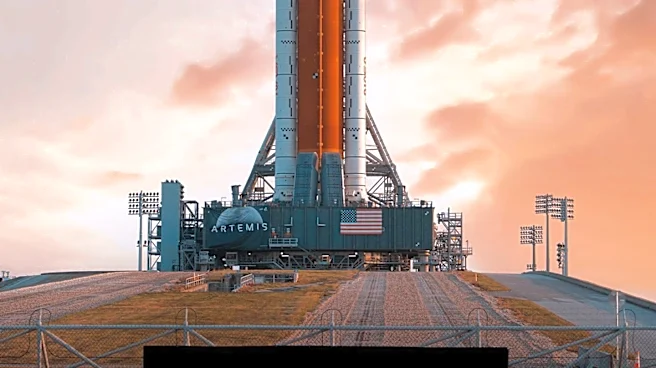
Jason Peterson, a range operations manager at NASA's Stennis Space Center, played a crucial role in the Artemis II mission, which involved a test flight around the Moon. Peterson, who grew up near the NASA facility in Mississippi, has a background in the U.S.
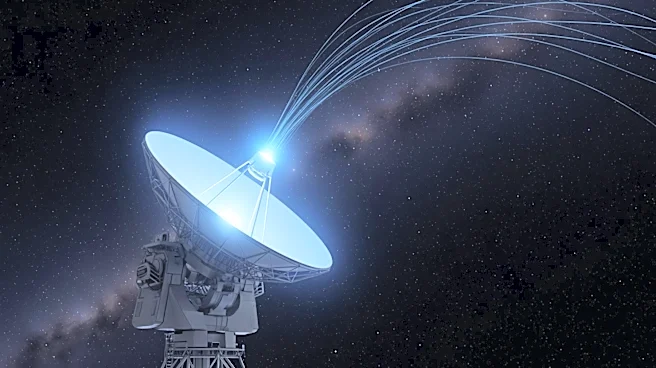
Air Force and Air National Guard, which prepared him for the demanding work schedule required for the mission. His responsibilities included supporting the team that delivered video and communication feeds for the launch and splashdown of NASA's Space Launch System (SLS) rocket with the Artemis II crew aboard the Orion spacecraft. The mission, which lasted nearly 10 days, included a record-setting lunar flyby. Peterson was the first to spot the returning capsule aboard the USS John P. Murtha, marking a significant moment in his career.
Why It's Important?
The Artemis II mission is a pivotal step in NASA's efforts to return humans to the Moon and eventually conduct surface missions. Peterson's role highlights the importance of experienced personnel in ensuring the success of complex space missions. The mission's success demonstrates NASA's capability to conduct long-duration crewed missions beyond low Earth orbit, paving the way for future exploration. This has significant implications for U.S. leadership in space exploration, potentially influencing international collaborations and inspiring future generations of scientists and engineers.
What's Next?
Following the success of Artemis II, NASA is preparing for Artemis III, which will involve launching four astronauts aboard the Orion spacecraft on the SLS rocket. This mission aims to build on the achievements of Artemis II and set the stage for future lunar surface missions. Experts like Peterson will continue to play a vital role in these endeavors, ensuring that the technical and operational aspects of the missions are executed flawlessly.