




What's Happening?
The Federal Emergency Management Agency (FEMA) has denied requests for individual assistance for survivors of two recent hurricanes in Hawaii: Hurricane Lala, which impacted the state in August, and Hurricane Lowell, which struck Kaua'i in September.
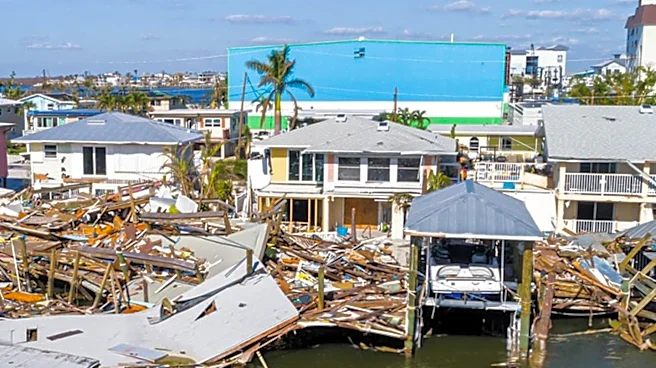
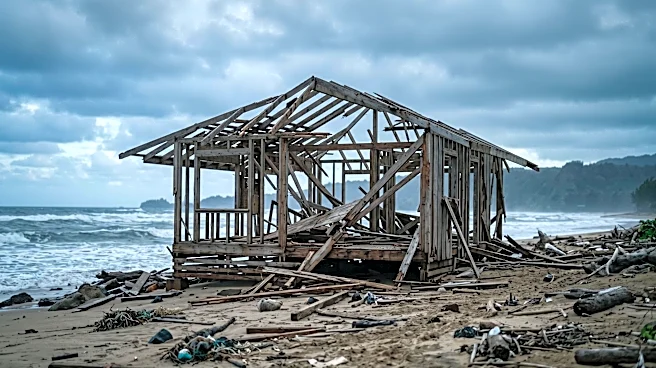
Hurricane Lowell caused significant damage on Kaua'i, with winds exceeding 70 mph, widespread power outages affecting over 90% of the island, and a storm surge that severely damaged coastal communities. Officials reported a preliminary public infrastructure damage estimate of over $93 million. Of the 247 homes damaged, 67 sustained major damage and 10 were destroyed. Kaua'i County officials are now consulting with the Hawaii Emergency Management Agency to determine their next steps, including the possibility of an appeal, while continuing to assist survivors through local resources.
Why It's Important?
FEMA's denial of individual assistance leaves many Hawaii residents facing significant financial burdens in their recovery efforts, particularly those whose homes were severely damaged or destroyed. This decision highlights potential gaps in federal disaster aid policies and their application, raising questions about the criteria used to assess eligibility for assistance. For affected communities, the lack of federal individual aid can prolong recovery, exacerbate economic hardship, and strain local resources. It also underscores the critical need for robust state and local emergency management capabilities and community support networks to fill the void left by federal non-intervention. The situation could also influence future disaster preparedness and insurance planning for residents in hurricane-prone regions.
What's Next?
Kaua'i County officials are actively consulting with the Hawaii Emergency Management Agency to explore their options, which include filing an appeal against FEMA's decision. In the interim, Kaua'i County and its partners are continuing to provide assistance to Hurricane Lowell survivors, directing them to resources via the 211 helpline and the Kaua'i Recovers website. The outcome of any potential appeal will be crucial for affected residents, as it could unlock much-needed federal financial support for rebuilding and recovery. This situation may also prompt a review of FEMA's assessment processes and criteria, especially concerning localized impacts and the capacity of state and local governments to respond to disasters.
Beyond the Headlines
The denial of federal individual assistance following significant natural disasters often sparks broader discussions about the role and responsibilities of federal, state, and local governments in disaster recovery. It can expose vulnerabilities in the social safety net and highlight disparities in how different communities are supported post-disaster. This situation in Hawaii may lead to increased advocacy for reforms in federal disaster aid policies, pushing for more flexible or inclusive criteria that better account for the unique circumstances of affected populations. Furthermore, it could prompt a re-evaluation of community resilience strategies, encouraging greater self-sufficiency and local preparedness in anticipation of potential federal aid limitations, thereby shifting more responsibility onto state and local entities.