







What's Happening?
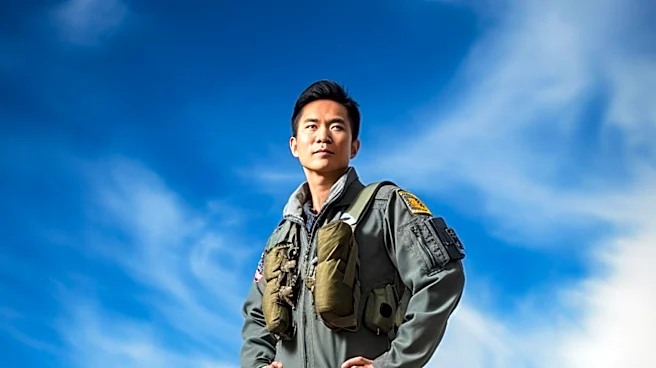
Ben Kuroki, a Japanese American airman, distinguished himself in World War II by flying 58 combat missions across both the European and Pacific theaters. Born in Nebraska to Japanese immigrant parents, Kuroki faced significant racial prejudice and skepticism
regarding his loyalty after the attack on Pearl Harbor. Despite the incarceration of over 120,000 Japanese Americans under Executive Order 9066, Kuroki desperately sought to join the U.S. Army Air Forces. He initially encountered barriers and was relegated to menial tasks, but his persistence led him to become an aerial gunner. He completed 30 missions in Europe, including the perilous Ploesti raid, and even volunteered for five additional missions beyond the standard tour. Upon his return, he was celebrated as a war hero, yet the government simultaneously imprisoned people of his ancestry. Kuroki then fought for the right to fly combat missions against Japan, a request initially denied due to military policy concerns about loyalty and mistaken identity. With the support of allies and ultimately the intervention of Secretary of War Henry Stimson, Kuroki received special clearance and completed 28 more missions in the Pacific, becoming the only known Japanese American Army airman to engage in combat against Japan.
Why It's Important?
Ben Kuroki's story is a powerful testament to the complex and often contradictory experiences of Japanese Americans during World War II. His unwavering patriotism and determination to serve his country, even as his community faced systemic discrimination and incarceration, highlight the profound injustice of the internment policy. Kuroki's fight to be allowed to fight for the U.S. underscores the deep-seated racial prejudice prevalent at the time within American society and its military. His eventual success in flying combat missions against Japan, despite initial military reluctance, challenged prevailing stereotypes and demonstrated the loyalty and courage of Japanese Americans. His post-war advocacy against racial discrimination further cemented his legacy as a civil rights figure, using his platform as a war hero to push for greater equality and recognition for Japanese Americans. His experience serves as a critical historical reminder of the impact of xenophobia and the importance of upholding civil liberties, even during times of national crisis.
What's Next?
While Ben Kuroki's direct military service concluded with the end of World War II, his legacy continued through his post-service activism. After leaving the military, he embarked on speaking tours to condemn racial discrimination and pursued a career in journalism, becoming the first Japanese American editor of a general-circulation newspaper in Nebraska. His efforts contributed to the broader civil rights movement and the ongoing struggle for recognition and justice for Japanese Americans. The U.S. government later acknowledged his extraordinary service, presenting him with the Distinguished Service Medal in 2005. Kuroki's story remains a significant part of American history, continuing to inform discussions about patriotism, racial equality, and the treatment of minority groups during wartime. His experiences are often revisited in educational contexts and historical analyses to understand the complexities of American identity and the enduring fight against prejudice.
Beyond the Headlines
Ben Kuroki's narrative extends beyond a simple war hero story, delving into profound ethical and cultural dimensions. His position as a celebrated American hero while his family and community were imprisoned created a deeply unsettling contradiction, forcing a national reckoning with the ideals of liberty and justice. The government's use of Kuroki to persuade young Nisei men to enlist, while their families remained behind barbed wire, exposed the moral ambiguities and pressures placed upon Japanese Americans. His personal struggle to reconcile his loyalty to the U.S. with the discrimination he faced highlights the psychological toll of systemic prejudice. Kuroki's story also sheds light on the concept of 'fighting for the right to fight,' a unique burden placed on marginalized groups to prove their belonging and patriotism. This deeper implication resonates with ongoing debates about identity, belonging, and the responsibilities of citizenship in a diverse society, particularly when national security concerns intersect with civil liberties.