





What's Happening?
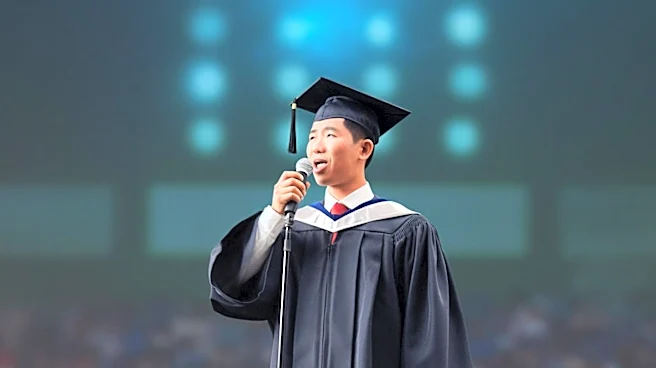
Commencement speeches, traditionally a staple of graduation ceremonies, are facing new challenges as controversies and changing expectations shape their delivery. Historically, these speeches have been opportunities for notable figures to impart wisdom
and celebrate graduates' achievements. However, recent events highlight a shift in how these speeches are perceived and delivered. For instance, a speaker at the University of Central Florida was booed for praising artificial intelligence, while Rutgers University canceled a speech by Rami Elghandour due to his pro-Palestine social media posts. Additionally, New York University students objected to Jonathan Haidt's scheduled address, citing a disconnect with their experiences. These incidents underscore the complexities of delivering a speech that resonates with diverse audiences while avoiding controversy.
Why It's Important?
The evolving nature of commencement speeches reflects broader societal changes, including heightened sensitivity to political and social issues. As universities strive to balance free speech with inclusivity, the selection of speakers becomes a delicate task. The controversies surrounding recent speeches illustrate the challenges institutions face in addressing diverse viewpoints while maintaining a celebratory atmosphere. This shift has implications for how universities engage with their communities and uphold their values. The pressure to select speakers who align with the institution's ethos and the students' expectations can influence the university's reputation and its relationship with stakeholders.
What's Next?
Universities may need to reassess their approach to selecting commencement speakers, considering both the potential for controversy and the desire to provide meaningful, inclusive experiences for graduates. This could involve more rigorous vetting processes and greater involvement of students and faculty in the selection process. Additionally, institutions might explore alternative formats for commencement addresses that prioritize community engagement and reflection over celebrity status. As societal norms continue to evolve, universities will likely face ongoing challenges in balancing tradition with the need for progressive, inclusive practices.
Beyond the Headlines
The controversies surrounding commencement speeches also highlight broader cultural shifts in how public discourse is conducted. The increasing polarization of political and social issues means that even traditionally apolitical events like graduations can become arenas for debate. This trend raises questions about the role of higher education in fostering open dialogue and critical thinking. As universities navigate these challenges, they may need to redefine the purpose and format of commencement speeches to better align with contemporary values and expectations.