





What's Happening?
The origins of Labor Day in the United States are subject to ongoing historical debate, specifically concerning whether Peter J. McGuire or Matthew Maguire, both Irish labor leaders, was the true founder. Peter J. McGuire, the son of Irish immigrants,
is widely credited with organizing the first Labor Day parade in New York in 1882, where over 10,000 workers marched for expanded workplace protections. However, a New Jersey paper published an op-ed shortly after President Grover Cleveland signed Labor Day into federal law in 1894, claiming Matthew Maguire was the 'undisputed author' of the holiday. The New Jersey Historical Society supports Maguire's claim, stating he led the procession after gathering many marchers. The American Federation of Labor, conversely, cites a resolution by McGuire from earlier in 1882 proposing a street celebration. Dissenters argue that Maguire's more radical politics, including his vice-presidential nomination for the Socialist Labor Party of America in 1896, may have led to his contributions being overlooked by the political establishment.
Why It's Important?
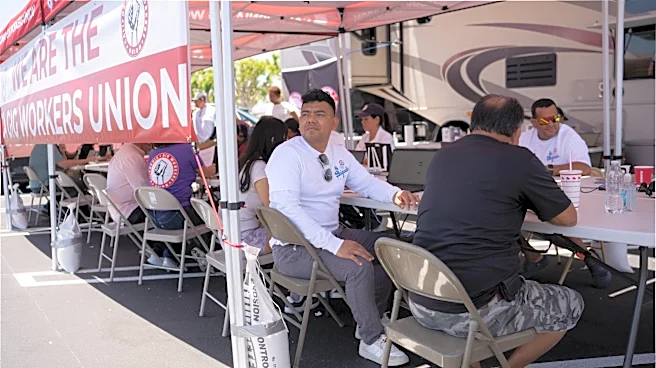
This historical dispute underscores the significant role Irish immigrants played in shaping the American labor movement and the broader U.S. working class during the 19th century. Their activism, often rooted in agrarian land activism from Ireland, was crucial in organizing unions and leading mass walkouts to secure labor protections. The debate over Labor Day's founder highlights the complexities of historical attribution, particularly when political ideologies and social standing influence recognition. The establishment of Labor Day as a federal holiday, despite President Cleveland's anti-labor stance, reflects a strategic move to distance the U.S. from the more radical May Day movement gaining traction among socialists globally. This historical context is important for understanding the evolution of labor rights in the U.S. and the enduring legacy of immigrant communities in advocating for worker protections. The resurgence of American labor in recent years, with public support for unions nearing 1950s highs, makes this historical foundation particularly relevant.
What's Next?
While the historical debate over the true founder of Labor Day continues, the collective legacy of both Peter J. McGuire and Matthew Maguire in advancing labor rights remains significant. The United Brotherhood of Carpenters and Joiners of America erected a memorial in McGuire's honor in New Jersey in 1952, which hosts an annual Labor Day commemoration, solidifying his recognition in many circles. However, the New Jersey Historical Society and other proponents continue to advocate for Matthew Maguire's contributions. The ongoing discussion serves as a reminder of the diverse and often contested narratives within American labor history. As American labor experiences a resurgence, with increased public support for unions, the historical foundations laid by figures like McGuire and Maguire continue to inform contemporary efforts to strengthen labor laws and expand worker protections. The focus will likely remain on the broader impact of labor activism rather than definitively resolving the individual claim to the holiday's founding.
Beyond the Headlines
Beyond the specific claims of McGuire and Maguire, the Labor Day debate illuminates the broader narrative of immigrant contributions to American society and the often-overlooked radical elements within early labor movements. The suppression of Matthew Maguire's recognition, potentially due to his socialist leanings, reflects a historical pattern of marginalizing radical voices in official narratives. This raises questions about how history is constructed and who gets to be remembered as a national hero. The story also highlights the strategic political maneuvering involved in establishing national holidays, where the intent can be to co-opt or neutralize more revolutionary movements. The enduring struggle for labor rights in the U.S., even with a dedicated holiday, points to the continuous need for advocacy and organization. The legacy of Irish labor activists, including later figures like James Connolly and Mike Quill, demonstrates a sustained commitment to social justice and cross-ethnic solidarity within the American working class, emphasizing that the fight for fair labor practices is an ongoing process.