



What's Happening?
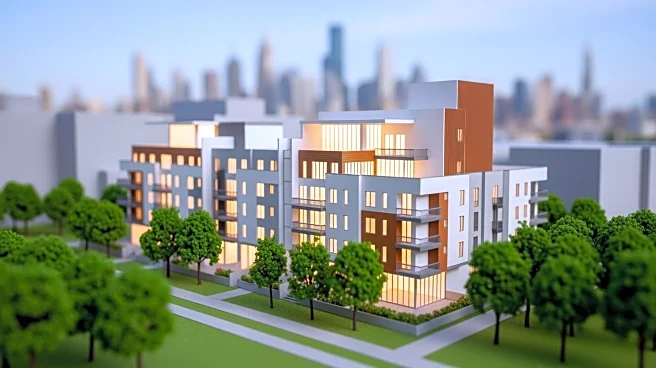
Magnus Capital Partners is set to begin construction on a $72 million workforce housing project named HōM Flats at Forest in the Five Oaks neighborhood of northwest Dayton. This development will transform a 13-acre vacant site, previously home to Julienne
High School and the Hampton Square apartments, into a community of 260 units. The project aims to provide high-quality, affordable housing options for working families, with units available to those earning between 50% to 70% of the area median income. The development will feature 11 buildings with a mix of one-, two-, and three-bedroom apartments, alongside amenities such as co-working spaces, fitness studios, and childcare facilities. The construction is expected to take approximately 24 months, with the first units anticipated to be available by spring 2027.
Why It's Important?
The HōM Flats at Forest project addresses the critical need for affordable housing in Dayton, where housing costs are rising faster than wages. By providing workforce housing, the development supports local economic stability and helps attract and retain talent in the area. This initiative is particularly significant as it offers a solution to housing and childcare challenges, which are major barriers to workforce stability. The project also contributes to the revitalization of the Five Oaks neighborhood, enhancing its appeal and potentially boosting local businesses. As housing affordability continues to be a pressing issue nationwide, developments like this play a crucial role in expanding access to quality rental housing.
What's Next?
The construction of HōM Flats at Forest is scheduled to begin soon, with a ceremonial groundbreaking expected in the spring of the following year. As the project progresses, it is likely to attract attention from local stakeholders, including residents, businesses, and policymakers, who may view it as a model for similar developments in other regions. The success of this project could influence future housing policies and encourage further investment in workforce housing across the country. Additionally, the integration of amenities such as childcare centers and co-working spaces may set a new standard for residential developments aimed at supporting working families.