
What's Happening?
Kazakhstan is set to achieve energy self-sufficiency by early 2027, with plans to generate a power surplus by 2029. This initiative is part of a broader strategy involving over 81 power-generation projects,
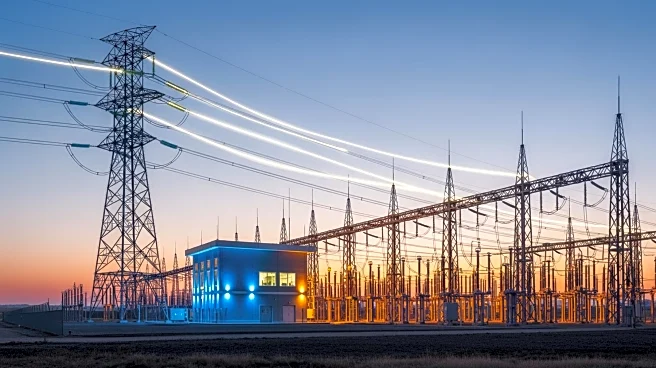
collectively valued at more than 13 trillion tenge (approximately $27.7 billion). These projects, spearheaded by the Ministry of Energy, aim to add 15.3 gigawatts of capacity, primarily through private investments. Energy Minister Yerlan Akkenzhenov highlighted that the new facilities will focus on maneuverable generation to address regulatory capacity shortages. The country plans to introduce over 26 gigawatts of additional generating capacity by 2035, with a significant portion coming from coal, gas, and renewable sources. Grid expansion is also underway, with major transmission lines being constructed to enhance connectivity and reliability.
Why It's Important?
Kazakhstan's move towards energy self-sufficiency and surplus is significant for its economic and geopolitical positioning. By eliminating its energy deficit, Kazakhstan can enhance its export capabilities, potentially becoming a key energy supplier in the region. This shift could attract foreign investment and strengthen the country's economic stability. The diversification of energy sources, including a focus on renewable energy, aligns with global trends towards sustainable energy solutions. Additionally, the infrastructure improvements will likely boost domestic industries and create job opportunities, contributing to economic growth.
What's Next?
The successful implementation of these projects will require strict adherence to timelines and efficient management. Prime Minister Olzhas Bektenov has emphasized the importance of meeting deadlines, warning against delays. As projects progress, Kazakhstan will need to navigate challenges related to technology integration and environmental impacts. The government and involved stakeholders must ensure that the transition to a surplus energy state is smooth and sustainable, potentially setting a precedent for other nations in the region.