


What's Happening?
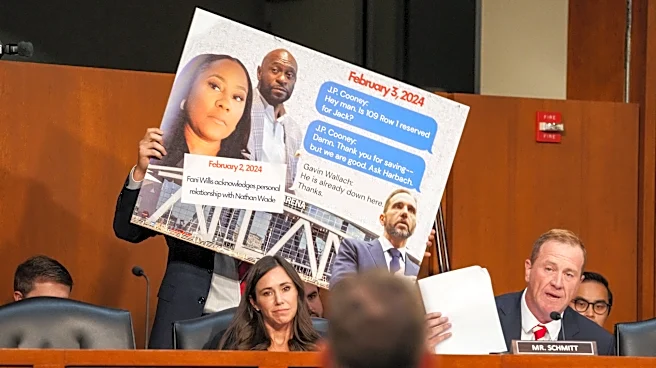
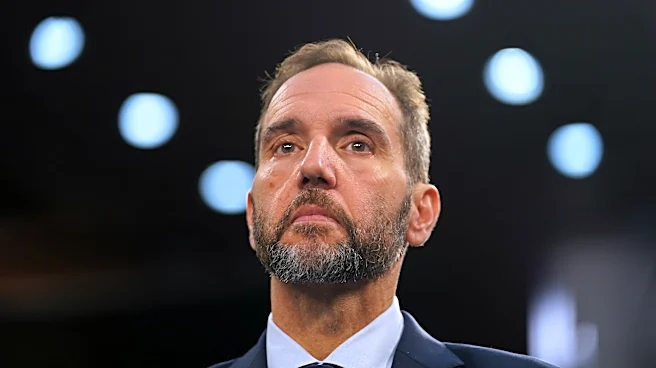
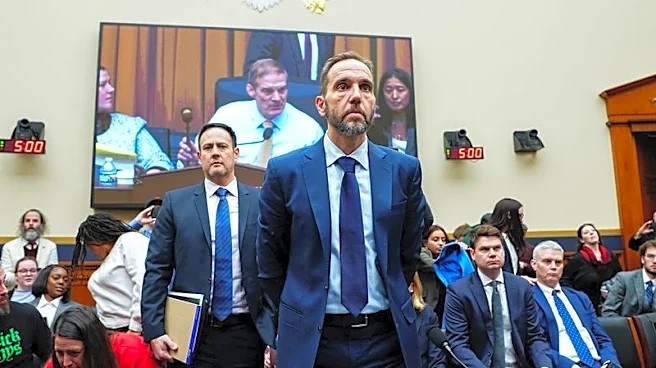
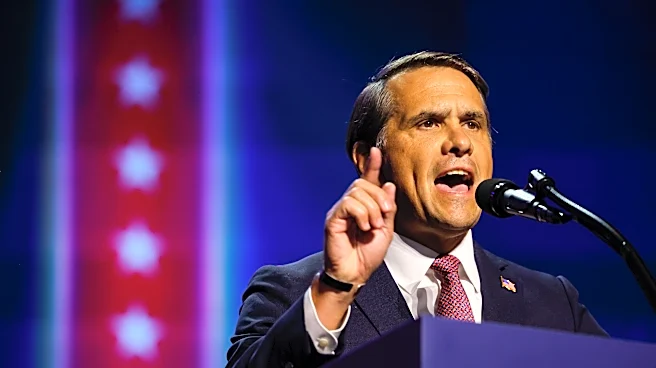
Republican Senator Eric Schmitt recently appeared on CNN's 'Anderson Cooper 360' where he addressed his earlier exchange with former special counsel Jack Smith. During the interrogation, Senator Schmitt reportedly mixed up details regarding basketball
games in an attempt to portray Smith as a perjurer. When questioned by Anderson Cooper, Senator Schmitt laughed off the incident and declined to state whether he regretted his handling of the moment. The segment also featured Democratic Senator Amy Klobuchar's reaction to the mishap and the broader hearing. This event highlights a contentious moment during a congressional hearing involving a former special counsel and a sitting senator, drawing attention to the nature of political questioning and accountability.
Why It's Important?
This incident is important as it underscores the often-polarized nature of political discourse and congressional oversight in the U.S. The attempt by Senator Schmitt to discredit former special counsel Jack Smith, particularly through what was perceived as a factual error, reflects broader strategies employed in political arenas to challenge credibility. The reaction from Senator Klobuchar further illustrates the partisan divide and differing interpretations of such exchanges. For the public, it raises questions about the thoroughness of preparation by elected officials during critical hearings and the impact of such moments on public perception of justice and accountability. The media's role, as exemplified by 'Anderson Cooper 360,' in broadcasting and analyzing these interactions is crucial for informing citizens about the conduct of their representatives and the processes of government.
What's Next?
In the immediate future, the exchange involving Senator Schmitt and former special counsel Jack Smith is likely to continue to be a topic of discussion in political commentary and news analysis. Senator Schmitt may face further scrutiny or criticism from political opponents and media outlets regarding his conduct during the hearing. Conversely, his supporters might defend his actions as a legitimate attempt to challenge the special counsel. The broader implications for congressional hearings could include increased attention to the accuracy of questioning and the decorum of proceedings. This event could also influence future strategies for both prosecutors testifying before Congress and senators conducting interrogations, potentially leading to more rigorous preparation or more cautious approaches to questioning.
Beyond the Headlines
Beyond the immediate political theater, this incident touches upon deeper issues concerning truth, accountability, and the role of media in a democratic society. The attempt to cast a former special counsel as a perjurer, even if based on a factual error, speaks to the high stakes involved in investigations and testimonies related to high-profile cases. It also highlights the challenge for the public to discern truth amidst partisan narratives. The way such events are covered and consumed can shape public trust in institutions, including Congress and the justice system. Furthermore, the incident could spark discussions about the ethical responsibilities of lawmakers during questioning and the standards of evidence presented in public forums, influencing how future political confrontations are perceived and judged.