







What's Happening?
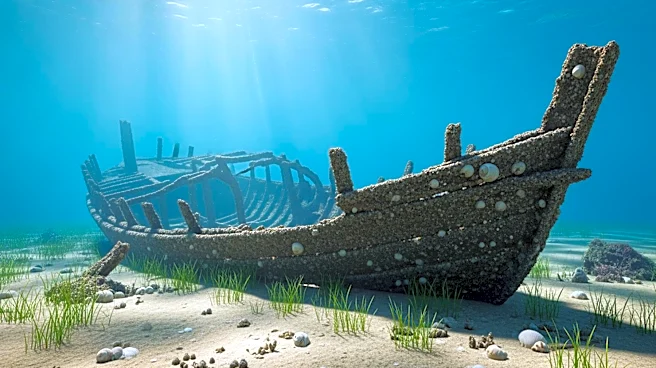
Park rangers in Canada have uncovered a shipwreck believed to be over 200 years old on Sable Island, a location notorious for maritime disasters. The shipwreck is thought to be the Swift, a civilian vessel that sank on September 27, 1812, while traveling
from Bermuda to Newfoundland. The Swift sank alongside the British Royal Navy frigate HMS Barbadoes and the schooner Emeline. The discovery was made by Parks Canada officials, who were first alerted to the site in February 2024 after finding a pulley wheel marked with the British Royal Navy insignia. Further excavation revealed additional artifacts, including copper sheathing with Admiralty stamps, suggesting a connection to the Barbadoes. The shipwreck's completeness and condition are unusual for Sable Island, where most shipwrecks are found as small fragments. The excavation involved collaboration with Mi’kmaw archaeological technicians and required adapting methods to the island's shifting sands.
Why It's Important?
The discovery of the Swift shipwreck is significant as it provides a rare opportunity to correlate a physical shipwreck with a documented historical event from before the 20th century. Sable Island, known as the 'graveyard of the Atlantic,' has over 350 recorded shipwrecks since 1583, but many lack sufficient distinguishing features to be linked to specific events. This find not only enriches historical knowledge but also highlights the challenges and complexities of maritime archaeology. The involvement of Mi’kmaw archaeological technicians underscores the importance of integrating indigenous knowledge and expertise in archaeological projects. The discovery could lead to further insights into the maritime history of the region and the conditions faced by ships and their crews during that era.
What's Next?
Following the documentation of the shipwreck, archaeologists covered it with sand to protect it from the elements. Future steps may involve more detailed analysis of the artifacts and further exploration of the site to uncover additional historical data. The discovery raises questions about the movement of Sable Island over time and how the shipwreck ended up far inland from the current shoreline. Continued research could provide answers to these questions and contribute to a better understanding of the island's dynamic environment. The findings may also prompt further archaeological investigations in the area, potentially leading to more discoveries related to the numerous shipwrecks recorded on Sable Island.