

What's Happening?
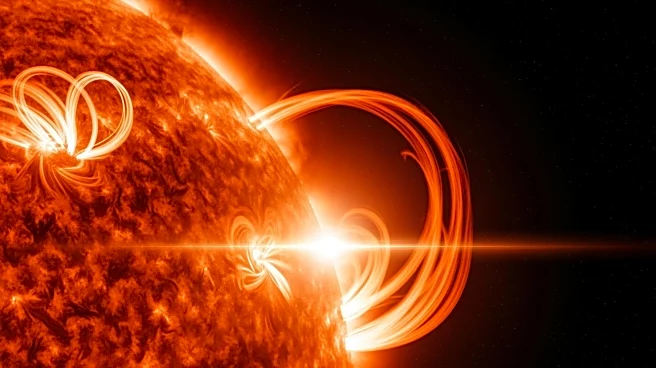
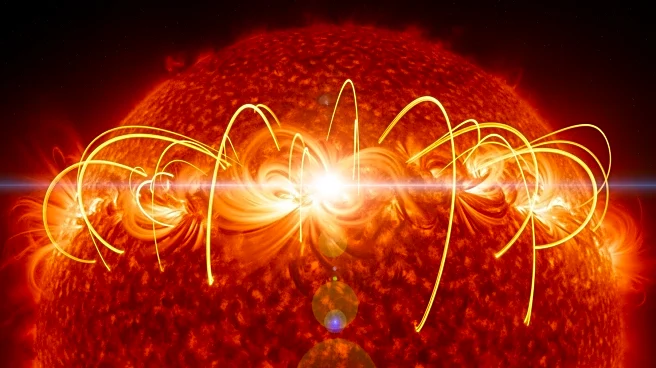
The Solar Orbiter mission has provided new insights into the formation of solar flares, revealing a 'magnetic avalanche' mechanism. Researchers analyzed data from an M7.7-class solar flare observed on September 30, 2024, which showed that large flares can
result from a cascade of smaller magnetic reconnection events. This discovery, published in Astronomy & Astrophysics, suggests that solar flares can build up through a series of smaller disruptions, rather than starting as a single large event. The findings could improve models used to predict flare-driven disruptions to satellites and radio communications.
Why It's Important?
Understanding the mechanisms behind solar flares is crucial for predicting space weather events that can impact satellite operations, radio communications, and even power grids on Earth. The 'magnetic avalanche' model provides a new perspective on how solar flares develop, offering a more detailed framework for anticipating their occurrence and potential effects. This research enhances the ability of scientists to forecast space weather, thereby improving the resilience of technological infrastructure against solar-induced disruptions.