


What's Happening?
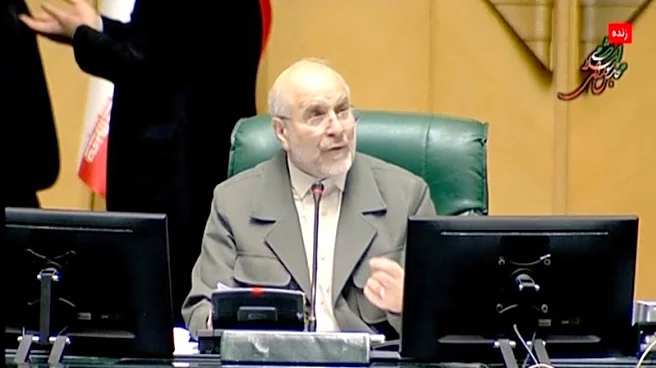
Following the assassination of Ali Larijani, Iran faces uncertainty over the appointment of a new secretary for its Supreme National Security Council. Saeed Jalili, a former nuclear negotiator and a hardline figure, is emerging as a possible successor.
Jalili is known for his uncompromising stance on regional and international issues, particularly regarding Iran's nuclear program and relations with the United States. His potential appointment could signal a shift towards more hardline policies, reducing chances for diplomatic solutions with the West. Jalili has previously served as the secretary of the Supreme National Security Council and played a significant role in Iran's nuclear talks with Western powers.
Why It's Important?
The potential appointment of Saeed Jalili as a key figure in Iran's leadership could have significant implications for international diplomacy and regional stability. Jalili's hardline stance may further strain relations between Iran and Western countries, particularly the United States and Israel. His leadership could lead to a more confrontational approach in Iran's foreign policy, impacting ongoing negotiations and efforts to resolve nuclear tensions. The rise of hardline figures in Iran's political landscape may also affect the country's internal dynamics, potentially leading to increased repression and reduced political openness.
What's Next?
If appointed, Jalili would likely reinforce hardline currents within Iran's decision-making processes, potentially escalating tensions with Western nations. The international community may respond with increased diplomatic pressure or sanctions, aiming to curb Iran's aggressive policies. Regional actors, including Israel and Gulf states, may also adjust their strategies in response to Iran's shifting political landscape. The appointment could influence Iran's approach to ongoing conflicts and negotiations, with potential impacts on global security and economic stability.
Beyond the Headlines
Jalili's appointment could trigger long-term shifts in Iran's political and diplomatic strategies, affecting its role in regional conflicts and global negotiations. The rise of hardline figures may lead to increased repression within Iran, impacting civil society and human rights. The international community may face challenges in engaging with Iran, requiring new strategies to address nuclear and regional issues. Jalili's leadership could also influence Iran's alliances and partnerships, reshaping its geopolitical position.