
What's Happening?
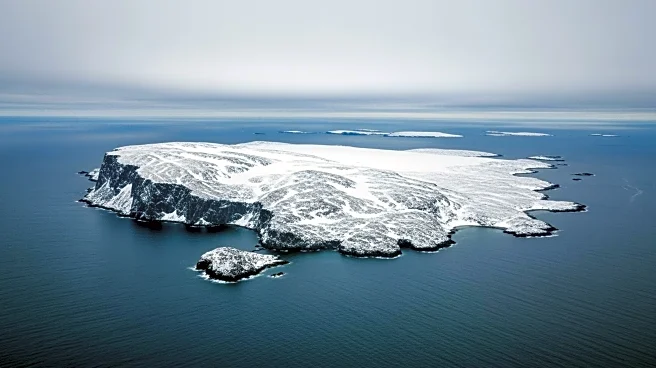
Denmark and Greenland are seeking a meeting with U.S. Secretary of State Marco Rubio following the Trump administration's renewed interest in acquiring Greenland, a strategic Arctic island and Danish territory.
The White House has indicated that military options are on the table, citing the need to secure the island against rising threats from China and Russia in the Arctic. Danish Prime Minister Mette Frederiksen has warned that such a move could end the NATO military alliance. European leaders, including those from France, Germany, and the UK, have reaffirmed Greenland's sovereignty, emphasizing that it belongs to its people. The U.S. military's recent actions in Venezuela have heightened European concerns, and President Trump has reiterated his desire to control the island, which is strategically located near the Arctic and North Atlantic approaches to North America.
Why It's Important?
The U.S. interest in Greenland underscores the strategic importance of the Arctic region amid global geopolitical tensions. Control over Greenland could enhance U.S. military and economic influence in the Arctic, a region rich in natural resources and critical for global shipping routes. However, the move risks straining relations with NATO allies, as Denmark and Greenland are part of the alliance. The situation highlights the delicate balance between national security interests and international diplomatic relations. The potential U.S. acquisition of Greenland could set a precedent for territorial claims, impacting global norms on sovereignty and self-determination.
What's Next?
Denmark and Greenland have requested a meeting with Secretary of State Rubio to discuss the situation. Previous attempts to arrange talks have been unsuccessful. The outcome of these discussions could influence future U.S. actions and international responses. European leaders are likely to continue advocating for Greenland's sovereignty, while U.S. lawmakers may face pressure to clarify the country's stance on NATO obligations and territorial integrity. The situation could lead to broader debates on Arctic policy and international law regarding territorial claims.