








What's Happening?
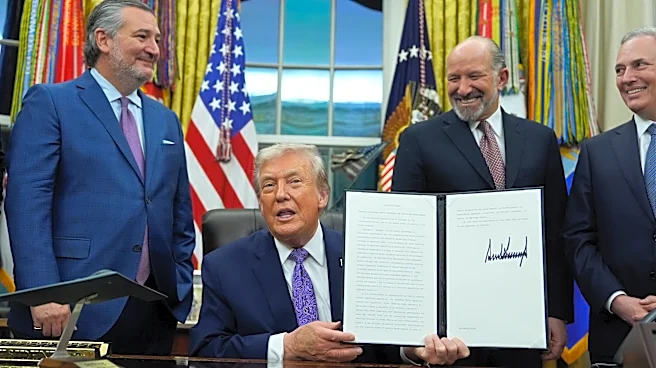
The Trump administration is set to launch a new initiative called Trump Accounts on July 4, coinciding with the 250th anniversary of the Declaration of Independence. This program aims to promote financial independence for American children by providing
a $1,000 government contribution to investment accounts opened for newborns during President Trump's second term. These accounts, managed by private investment firms, will invest in the stock market, and the funds will be accessible to the child only upon reaching 18 years of age for specific purposes such as education or home purchase. The initiative has garnered additional support from private donors, including significant contributions from billionaires like Michael Dell and Sanjay Mehrotra, who have pledged billions to support children who do not qualify for the government’s $1,000 contribution.
Why It's Important?
The introduction of Trump Accounts represents a significant policy move aimed at fostering long-term financial security for future generations. By encouraging early investment in the stock market, the program seeks to instill a sense of financial ownership and capitalism among young Americans. However, the initiative has sparked debate over its effectiveness in addressing immediate financial needs and its potential to exacerbate wealth inequality. Critics argue that the program does not adequately support children in their formative years and fails to compensate for cuts to other social programs under the Trump administration. The program's reliance on private investment firms and its focus on long-term financial growth highlight a shift towards market-based solutions for economic challenges.
What's Next?
As the Trump Accounts program rolls out, it is expected to face scrutiny from policymakers and the public regarding its implementation and impact. The administration may need to address concerns about accessibility and equity, particularly for low-income families who may struggle to contribute to these accounts. Additionally, the program's success will likely be measured by its ability to attract further private investment and its long-term impact on reducing economic disparities. Stakeholders, including philanthropic organizations and private companies, may play a crucial role in shaping the program's future through additional contributions and advocacy.
Beyond the Headlines
The launch of Trump Accounts could signal a broader trend towards privatization and market-driven solutions in public policy. This approach raises questions about the role of government in providing social safety nets and the ethical implications of relying on private wealth to address public needs. The program's focus on stock market investment also underscores the growing influence of financial markets in shaping economic policy and the potential risks associated with market volatility. As the program unfolds, it may prompt a reevaluation of how financial independence and security are defined and achieved in the U.S.