


What's Happening?
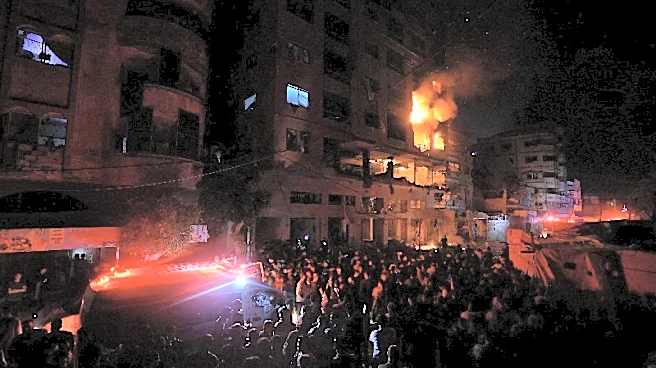
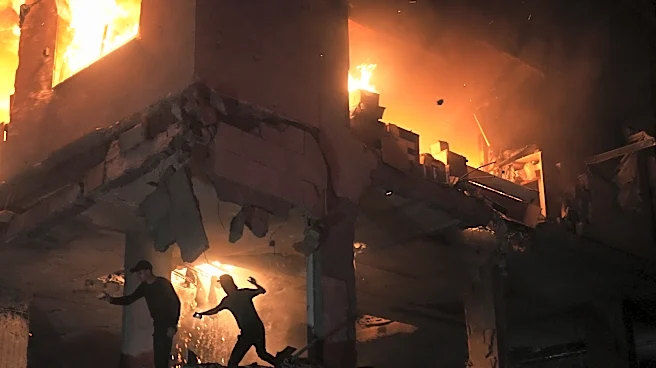
An Israeli airstrike targeted a residential building in Gaza City's Rimal neighborhood, aiming at Izz al-Din al-Haddad, identified by Israel as the head of Hamas' military wing in the Gaza Strip. The Israeli Defense Forces (IDF) have not confirmed Haddad's
fate, but officials express cautious optimism about the strike's success. The operation was part of a broader effort to dismantle Hamas' military leadership, with Haddad being a key figure following the death of Mohammed Sinwar. Israeli officials accuse Haddad of orchestrating attacks against Israeli forces and holding hostages during the war. The strike was reportedly approved after intelligence indicated Haddad had left his hideout, and a subsequent vehicle strike was conducted to confirm the target's elimination.
Why It's Important?
The targeting of Izz al-Din al-Haddad is significant as it represents Israel's ongoing strategy to weaken Hamas' military capabilities by eliminating its leadership. Haddad's involvement in planning attacks and holding hostages underscores his importance within Hamas, making his potential removal a critical blow to the group's operational capacity. This action also sends a message to other militant leaders about Israel's resolve to pursue those responsible for violence against its citizens. The strike could impact the dynamics of the Israeli-Palestinian conflict, potentially escalating tensions or leading to retaliatory actions from Hamas.
What's Next?
The situation remains fluid as Israeli officials continue to assess the outcome of the strike. If confirmed, Haddad's death could lead to a power vacuum within Hamas' military wing, prompting internal reorganization or power struggles. Israel may face international scrutiny over the strike, especially if civilian casualties are reported. The broader implications for peace efforts in the region are uncertain, as both sides may harden their stances in response to the ongoing conflict. Monitoring the reactions from Palestinian groups and international stakeholders will be crucial in understanding the future trajectory of the conflict.