



What's Happening?
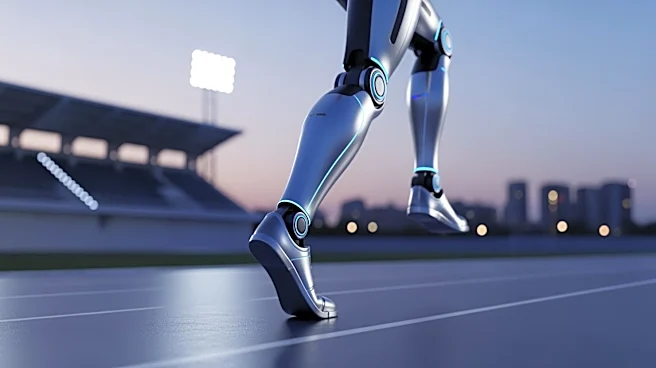
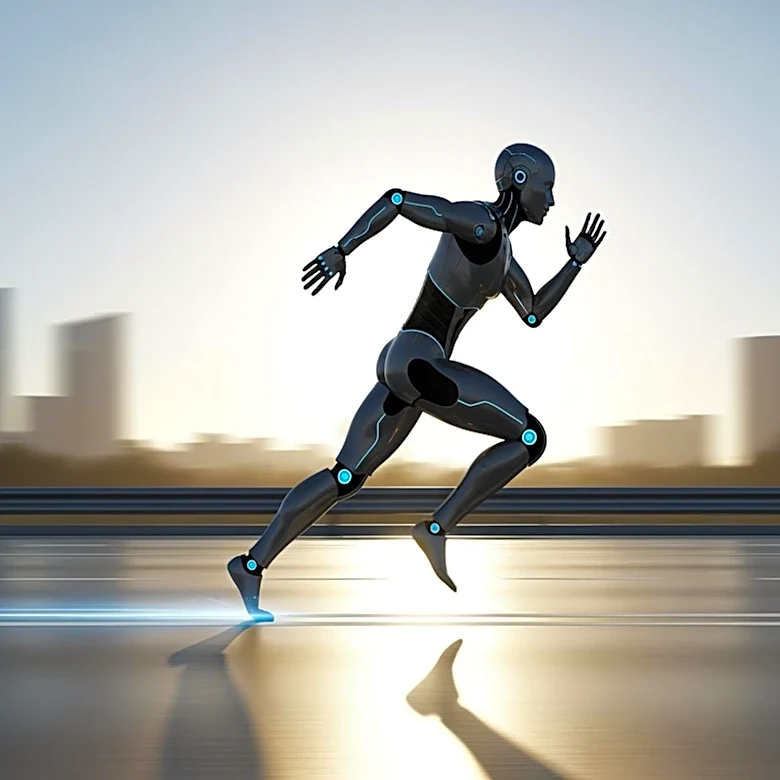
A humanoid robot has achieved a significant milestone by winning a half-marathon race in Beijing, surpassing the human world record for the same distance. The event, held in the Beijing Economic-Technological Development Area, saw the robot from Honor,
a Chinese smartphone maker, complete the 21-kilometer race in 50 minutes and 26 seconds. This time is faster than the human world record set by Uganda's Jacob Kiplimo, who completed the distance in about 57 minutes. The race featured both autonomously navigating robots and those controlled remotely, with about 40% of the participants navigating the course on their own. The event highlighted China's advancements in robotics and technology, with the winning robot using autonomous navigation to secure the championship under the event's weighted scoring rules.
Why It's Important?
This achievement underscores China's rapid progress in robotics and artificial intelligence, areas that are becoming increasingly competitive on the global stage, particularly with the United States. The success of the humanoid robot in this race is a testament to China's commitment to advancing its technological capabilities, as outlined in its latest five-year plan. This plan emphasizes targeting the frontiers of science and technology, with a focus on developing products like humanoid robots. The implications of such advancements are significant, as they could lead to increased automation and efficiency in various sectors, potentially impacting labor markets and economic structures worldwide.
What's Next?
The success of the humanoid robot in Beijing is likely to spur further developments and competitions in the field of robotics. As China continues to invest in technology, we can expect more innovations and applications of humanoid robots in different industries. This could lead to increased collaboration and competition between countries in the field of robotics and artificial intelligence. Additionally, the advancements in autonomous navigation and robotics could influence policy decisions and strategic planning in other nations, as they seek to keep pace with technological developments.
Beyond the Headlines
The event also raises questions about the ethical and societal implications of advanced robotics. As robots become more capable of performing tasks traditionally done by humans, there may be concerns about job displacement and the need for new regulations to manage the integration of robots into everyday life. Furthermore, the use of robots in competitive events could lead to discussions about the nature of competition and the role of technology in sports and other human endeavors.