

What's Happening?
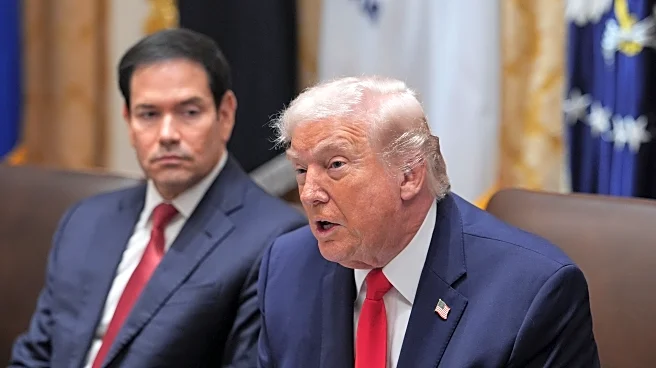
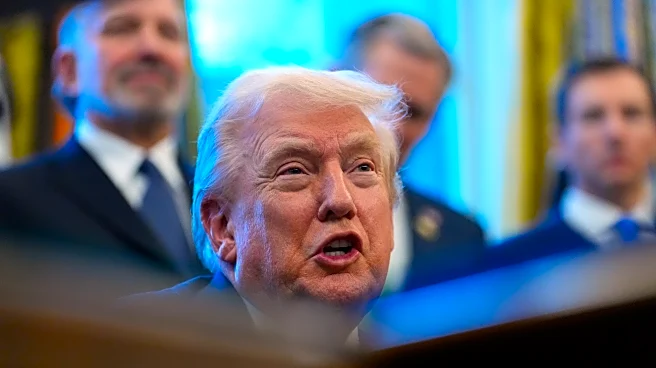
President Trump signed a $1.2 trillion spending package into law, ending the partial government shutdown. The House of Representatives passed the bill with a narrow 217-214 vote, finalizing funding for 11 of the 12 annual appropriations bills. This move
keeps most federal operations running through September 30. The bill's passage is a significant development in resolving the shutdown, but it also initiates further debates over the Department of Homeland Security (DHS) funding. The package only funds DHS for two weeks, a decision influenced by Democratic demands for more restrictions on immigration enforcement. The shutdown began after a failure to reach a funding agreement, affecting parts of the federal government. President Trump, alongside GOP leaders, highlighted the bill's focus on fiscal responsibility and cutting wasteful spending.
Why It's Important?
The signing of this spending bill is a critical step in ending the partial government shutdown, which disrupted various federal operations. It underscores the ongoing political tensions surrounding immigration policies and DHS funding. The bill's passage reflects a temporary resolution but highlights the need for further negotiations, particularly concerning immigration enforcement policies. The outcome of these debates could significantly impact U.S. immigration policy and the functioning of DHS. Additionally, the bill's emphasis on fiscal responsibility and cutting wasteful spending aligns with Republican priorities, potentially influencing future budgetary decisions and public policy.
What's Next?
The immediate focus will be on further congressional debates over DHS funding, as the current package only provides funding for two weeks. Democrats, led by House Democratic Leader Hakeem Jeffries, have called for substantial changes to immigration operations within DHS. The outcome of these negotiations will be crucial in determining the future of U.S. immigration policy and DHS operations. Political leaders will need to navigate these discussions carefully to avoid another shutdown and address the concerns raised by both parties.