






What's Happening?
The Federal Aviation Administration (FAA) has recently rolled out its new $875 million AI-powered system, SMART (Strategic Management of Airspace, Routes and Trajectories), designed to predict and mitigate air traffic problems. This national deployment,
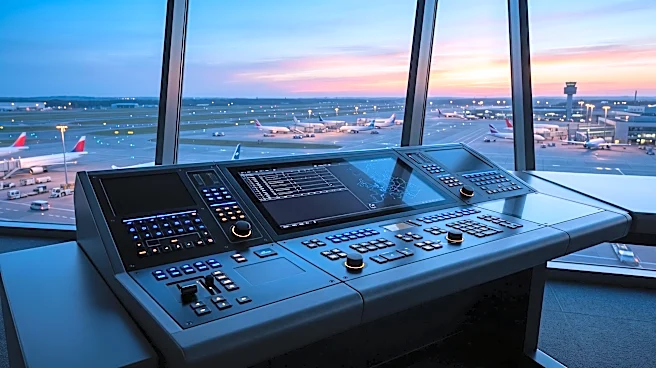
which began on November 10, occurred just three days before a widespread airline ground stop that caused significant travel disruptions. Government officials and Air Space Intelligence (ASI), the company behind SMART, have stated there is no connection between the ground stop and the new AI system. However, the timing has prompted questions regarding the system's functionality, benefits, risks, and the safeguards in place. The SMART system centralizes over 200 data streams, including weather patterns, flight paths, and traffic flow, to provide comprehensive visualizations and recommendations to human air traffic controllers. During initial tests in the Washington area, the system reportedly helped reroute 180 flights, saving an average of 10 minutes and 80 gallons of fuel per flight. Despite these reported efficiencies, lawmakers and aviation safety experts have expressed concerns about relying on AI in critical aviation safety roles, particularly regarding potential 'hallucinations' where AI models fabricate false information.
Why It's Important?
The deployment of the SMART AI system marks a significant technological advancement in U.S. air traffic management, aiming to enhance efficiency and safety in the nation's complex airspace. Its ability to synthesize vast amounts of data and predict potential issues could lead to fewer delays, reduced fuel consumption, and improved operational flow for airlines and travelers. However, the concerns raised by lawmakers and experts highlight a critical debate about the integration of artificial intelligence into high-stakes environments where human lives are at risk. The potential for AI 'hallucinations' or errors, even when the system is designed to assist rather than control, introduces new safety considerations. The successful and safe implementation of SMART could set a precedent for AI adoption in other critical infrastructure sectors, while any failures or perceived risks could lead to increased scrutiny and a more cautious approach to AI integration across various industries. The system's performance will also be closely watched by international aviation authorities, as no other country currently has a fully operational AI air traffic tool like SMART.
What's Next?
The FAA and ASI will likely continue to monitor the performance of the SMART system closely, especially in the wake of the recent national ground stop, to address any operational issues or public concerns. Lawmakers, who previously requested an audit of the software, are expected to maintain their scrutiny, particularly regarding safety protocols and the input of frontline aviation safety personnel in the system's development and deployment. Further discussions and potential adjustments to the system's implementation or training protocols for air traffic controllers may occur based on ongoing evaluations and feedback. The aviation industry, including airlines and pilot associations, will also be observing the system's impact on flight operations and safety. The ongoing dialogue will likely focus on ensuring that the AI system remains a supportive tool for human decision-making rather than a replacement, with robust verification and validation processes in place to prevent errors and maintain the highest safety standards in air travel.
Beyond the Headlines
The introduction of the SMART AI system delves into broader implications concerning the future of human-AI collaboration in critical sectors. While the system is designed to assist human controllers, it raises fundamental questions about the evolving role of human expertise versus algorithmic recommendations. The debate over AI's potential for 'hallucinations' underscores the ethical and practical challenges of deploying advanced AI in environments where absolute accuracy is paramount. This development could influence legal frameworks surrounding accountability in AI-driven systems, particularly in cases of operational failures. Culturally, it reflects a growing societal reliance on AI for complex problem-solving, while also highlighting inherent anxieties about ceding control to machines. The success or failure of SMART will not only impact aviation but also shape public perception and policy regarding AI integration in other sensitive areas like healthcare, defense, and transportation, potentially accelerating or decelerating the pace of AI adoption across various industries.