






What's Happening?
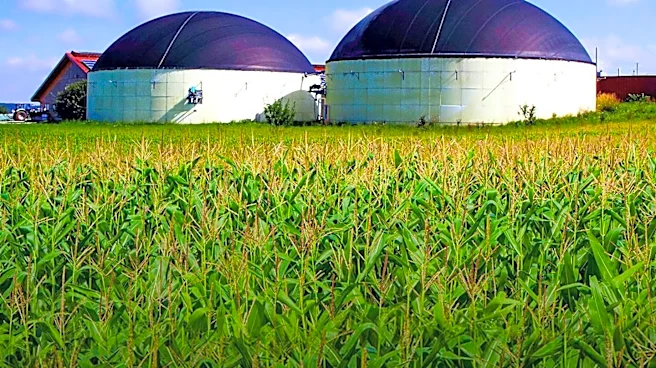
A new project in Broken Bow, Nebraska, has broken ground to convert cattle manure from the Adams Land & Cattle feedlot into pipeline-quality natural gas. The initiative involves eight anaerobic digesters designed to process livestock waste, with an anticipated
annual production of approximately 1.2 million MMBtu of renewable natural gas. Neogenyx Fuels, the company owning the facility, highlights the project's potential to support bio-LNG production for global maritime markets, connecting Nebraska to the growing demand for lower-carbon energy solutions. Michael Bakas, CEO of Neogenyx Fuels, stated that this facility demonstrates American agriculture's role in renewable fuels, driving private investment, job creation, and local economic growth. The U.S. Environmental Protection Agency (EPA) supports such biogas recovery operations, noting their benefits for farmers through diversified income streams, rural economic revitalization, enhanced energy independence, and reduced waste. The project aims to reduce greenhouse gas emissions by about 63,700 metric tons annually.
Why It's Important?
This project signifies a notable advancement in sustainable energy production within the U.S. agricultural sector, offering a model for converting agricultural waste into valuable energy resources. By capturing methane from cattle manure, a potent greenhouse gas, the facility contributes to significant reductions in atmospheric emissions, with biogas projects often rated at a carbon intensity of -250, far below solar or wind energy. This initiative also provides economic benefits to farmers by creating new revenue streams and reducing waste, aligning with EPA recommendations for 'biogas recovery' operations. The location in rural Nebraska may help mitigate some of the environmental and community impact concerns that have arisen in more densely populated areas like California. The project's success could encourage similar ventures across the nation, bolstering energy independence and fostering a circular economy within agriculture. However, critics argue that incentivizing large-scale cattle ranching through such projects could exacerbate existing environmental issues related to concentrated animal feeding operations.
What's Next?
Once fully operational, the Broken Bow facility is expected to produce 1.2 million MMBtu of pipeline-quality natural gas annually, contributing to the supply of renewable natural gas for energy production and shipping fuel. The project's performance in reducing greenhouse gas emissions by an estimated 63,700 metric tons annually will be closely watched as a benchmark for similar agricultural biogas initiatives. The success of this facility in rural Nebraska could influence policy discussions and investment decisions regarding biogas projects in other states, potentially leading to broader adoption of manure-to-energy technologies. The debate between environmental benefits and concerns over supporting large-scale animal agriculture will likely continue, shaping the regulatory landscape for future biogas developments. The project's ability to connect Nebraska to global maritime markets through bio-LNG production could also open new economic avenues for the region.
Beyond the Headlines
The Nebraska biogas project highlights a complex interplay between environmental sustainability, agricultural economics, and energy policy. While proponents emphasize the significant reduction in methane emissions and the creation of renewable energy, critics raise concerns about the potential for such incentives to entrench or expand large-scale animal agriculture, which itself has environmental impacts. The carbon intensity rating of -250 for biogas projects, which accounts for methane capture, presents a compelling argument for their environmental value compared to other renewables. However, the debate over whether these projects truly mitigate or merely shift environmental burdens remains. This initiative also touches upon the broader challenge of waste management in industrial agriculture and the innovative solutions being developed to address it. The project's success could influence the perception and viability of similar ventures, potentially leading to a re-evaluation of how agricultural waste is managed and utilized on a national scale.