

What's Happening?
Researchers are investigating how large storms, such as Hurricane Helene in 2024, contribute to the spread of microplastics in the environment, particularly in western North Carolina. Austin Gray, a biologist at Virginia Tech, and his team were already
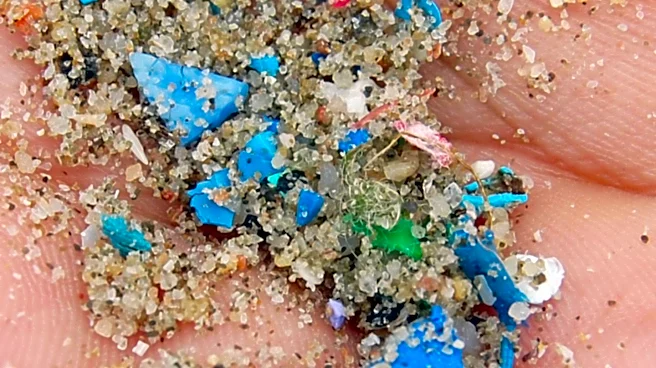
studying microplastic deposition in streams and waterways when Hurricane Helene struck. This provided a unique opportunity to collect data before, during, and after a major tropical system, a rare occurrence in the Western Hemisphere for such a powerful storm. Jason Love, associate director at the Highlands biological station, reported that during the three days of the storm, over 10,000 microplastics per square meter were collected, representing about 20% of the total microplastics typically found over an entire year. Microplastics originate from the breakdown of larger plastic items like water bottles, shopping bags, and tires, and can be projected into the atmosphere by clashing waves in oceans and river networks.
Why It's Important?
This research is crucial for understanding the environmental impact of microplastics, especially as climate change intensifies storms. The findings suggest that major weather events act as 'super-depositors' of these tiny plastic fragments, significantly accelerating their distribution across ecosystems. This has implications for human health, as microplastics are found in air, water, and even within human bodies, though their full health effects are still being studied. The study highlights a human-caused issue, emphasizing that increased plastic production and single-use plastics contribute to the problem, which is likely to worsen with more intense storms. The data collected from Hurricane Helene provides valuable insights into how these pollutants are transported and deposited, informing future environmental policies and mitigation strategies aimed at reducing plastic pollution and its ecological footprint.
What's Next?
More research is needed to fully understand the effects of microplastics on human health, as indicated by Austin Gray. The ongoing increase in plastic production combined with the intensification of storms due to climate change suggests that the problem of microplastic deposition will likely escalate. This necessitates continued monitoring and research into the pathways and impacts of these pollutants. The findings also underscore the urgency for broader societal discussions and actions regarding plastic production, single-use plastics, and fast fashion. Without significant changes in these areas, the problem is expected to worsen. Future efforts may focus on developing more effective methods for tracking microplastic movement, assessing their long-term ecological and health consequences, and implementing policies to reduce plastic waste at its source.
Beyond the Headlines
The study on microplastic dispersal by hurricanes reveals a complex interplay between human industrial activity and natural environmental processes, exacerbated by climate change. It highlights how seemingly localized pollution can become a widespread environmental issue through atmospheric and hydrological transport. This raises profound ethical questions about intergenerational responsibility, as current consumption patterns are creating persistent environmental contaminants that will affect future generations. Legally, these findings could bolster arguments for stricter regulations on plastic production and waste management, potentially leading to new international agreements or national policies. Culturally, it challenges societies to re-evaluate their relationship with plastic and consumerism, pushing for a shift towards more sustainable practices and a circular economy. The long-term implications include potential disruptions to ecosystems, food chains, and human health, making this a critical area of ongoing scientific and policy concern.