







What's Happening?
Stark, a German company specializing in loitering munitions, and IBM Germany have unveiled a new solution called STARK Continuum powered by IBM. This system is designed to facilitate the rapid and secure installation of software updates on drones operating
in combat zones. The technology was presented at the AFCEA exhibition. The system aims to ensure that drones, including those supplied to Ukraine, can receive critical updates without the risk of malicious software installation via external media. While the system currently requires a connection to the Bundeswehr IT network for security reasons, making its immediate availability to Ukrainian forces uncertain, its potential to enhance drone operational efficiency is significant. The ability to update software virtually just before a mission could allow for task-specific software deployment, improving adaptability and effectiveness.
Why It's Important?
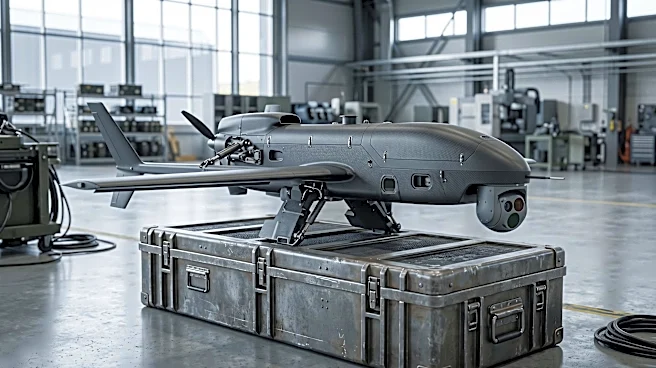
This development is important because it addresses a critical logistical and security challenge in modern drone warfare: keeping unmanned aerial vehicles (UAVs) updated with the latest software in dynamic combat environments. For forces like those in Ukraine, which utilize Stark's Virtus strike drones and Vector reconnaissance drones, such a system could dramatically improve their operational capabilities. Timely software updates can introduce new functionalities, enhance targeting precision, improve counter-electronic warfare measures, and patch vulnerabilities. The secure nature of the update process, routed through a military IT network, is crucial for preventing cyberattacks and maintaining operational integrity. If this technology becomes accessible to Ukraine, it could provide a significant tactical advantage by allowing their drone fleets to adapt more quickly to evolving battlefield conditions and threats, potentially reducing drone downtime and increasing mission success rates.
What's Next?
The immediate next step involves determining whether the STARK Continuum solution will be made available to customers beyond the Bundeswehr, particularly to countries like Ukraine. While the system's current reliance on the German army's IT network presents a hurdle, discussions and potential adaptations could lead to its broader deployment. If adopted by Ukraine, it would likely involve integrating the system into their existing drone operations and training personnel on its use. The long-term implications could see similar secure, rapid update systems becoming a standard feature for military drones globally, influencing future drone development and procurement strategies. The success of this system in real-world combat scenarios, if implemented, will also likely inform future advancements in combat AI and drone swarm technologies.
Beyond the Headlines
Beyond the immediate tactical advantages, this technology highlights a broader trend in modern warfare: the increasing reliance on software-defined capabilities and the need for agile, secure update mechanisms. The integration of combat artificial intelligence in drone swarms, as seen with Ukraine's Virtus and Vector drones, underscores the evolving nature of military technology. The ability to deliver 'express updates' to individual drones for specific tasks points towards a future where military hardware is highly adaptable and responsive to real-time intelligence. This also raises ethical and strategic questions about the speed of technological evolution in warfare, the potential for AI-driven autonomous decision-making, and the implications for international arms control. The secure delivery of software updates also emphasizes the growing importance of cybersecurity in military operations, as software vulnerabilities could be exploited to compromise entire drone fleets.