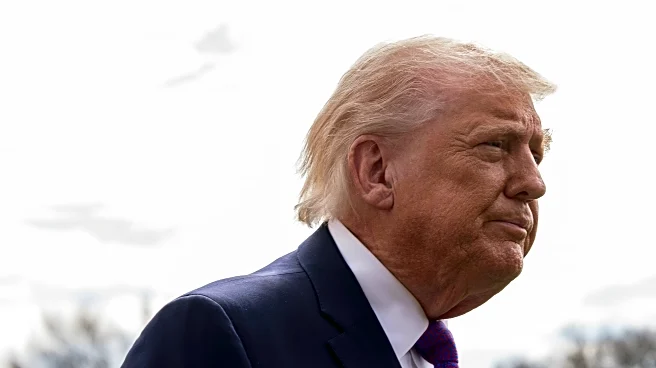




What's Happening?
At a recent legal event in Washington, D.C., Supreme Court Justices Ketanji Brown Jackson and Brett Kavanaugh engaged in a public debate over the use of the 'shadow docket' by the Trump administration. Justice Jackson criticized the conservative-majority
Supreme Court for allowing some of President Trump's policies to take effect immediately, even as legal challenges were still pending. She argued that this practice has led to a 'warped' process that deviates from the norm. Justice Kavanaugh, however, defended the court's actions, stating that the Supreme Court has treated both the Trump and Biden administrations similarly in emergency cases. The shadow docket refers to the court's expedited handling of cases without full briefing or oral arguments, often lacking transparency. The Trump administration has seen a high success rate in these emergency motions, with the court backing it in 80% of cases.
Why It's Important?
The debate over the shadow docket highlights significant concerns about the transparency and fairness of the Supreme Court's decision-making process. The court's willingness to grant emergency motions has implications for the balance of power between the executive branch and the judiciary. Critics argue that this trend favors the executive branch, allowing policies to be implemented without thorough judicial review. This could set a precedent for future administrations to bypass traditional legal processes, potentially undermining the rule of law. The discussion also reflects broader political tensions within the court, as liberal and conservative justices clash over the court's role in adjudicating politically charged issues.
What's Next?
The ongoing debate over the shadow docket is likely to continue as the Supreme Court faces more emergency cases. Legal scholars and policymakers may call for reforms to increase transparency and accountability in the court's handling of such cases. Additionally, the court's approach to emergency motions could influence future administrations' strategies in implementing controversial policies. Stakeholders, including civil rights groups and legal experts, may push for greater scrutiny of the court's decisions to ensure they align with constitutional principles.