
What's Happening?
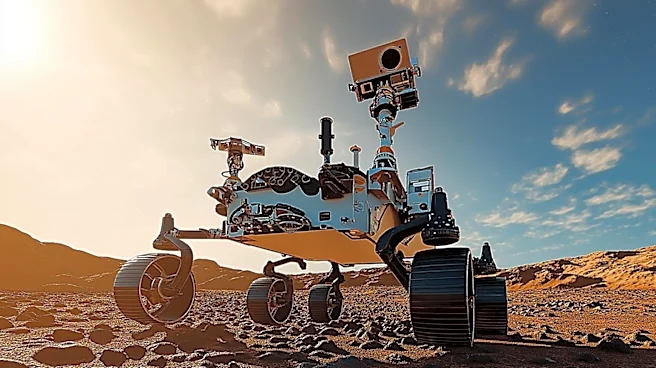
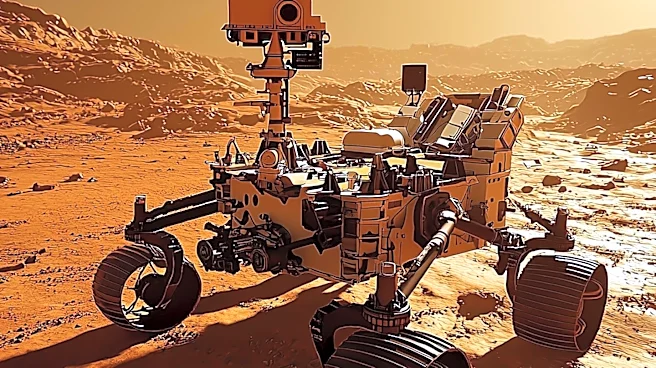
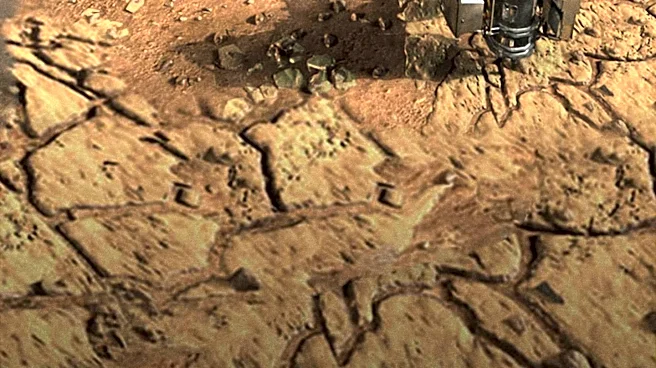
NASA's Curiosity Mars Rover has discovered a field of honeycomb-like textures on the Martian surface, known as polygonal fractures. These formations were captured in a 360-degree panorama during the rover's exploration of a Martian valley called 'Valle
Grande.' The polygons, ranging from 1.5 to 3 inches in size, are believed to have formed through processes such as mud cracking, temperature cycles, or sediment compression. This discovery adds to Curiosity's ongoing mission to study Mars' geological history and its potential to have supported microbial life. Since its landing in 2012, Curiosity has provided significant insights into Mars' ancient environment, including evidence of water and organic molecules.
Why It's Important?
The discovery of these polygonal textures is significant as it provides further evidence of Mars' dynamic geological history. Understanding the formation of these features can offer clues about past environmental conditions on Mars, including the presence of water and the planet's climate history. This information is crucial for scientists as they piece together the planet's ability to support life. The findings also enhance our understanding of planetary geology, which can inform future missions and the search for life beyond Earth. Curiosity's ongoing discoveries continue to inspire interest in Mars exploration and the potential for human missions to the Red Planet.
What's Next?
Curiosity will continue its ascent of Mount Sharp, a 3-mile-tall mountain it has been exploring since 2014. The rover's mission is to study the mountain's layers, which hold clues to Mars' past climate and habitability. Scientists will analyze the data collected from the polygonal textures to determine the processes that formed them. This analysis will help refine models of Mars' geological history and guide future exploration efforts. As Curiosity continues its mission, it will likely uncover more geological features that will further our understanding of Mars and its potential to have supported life.