
What's Happening?
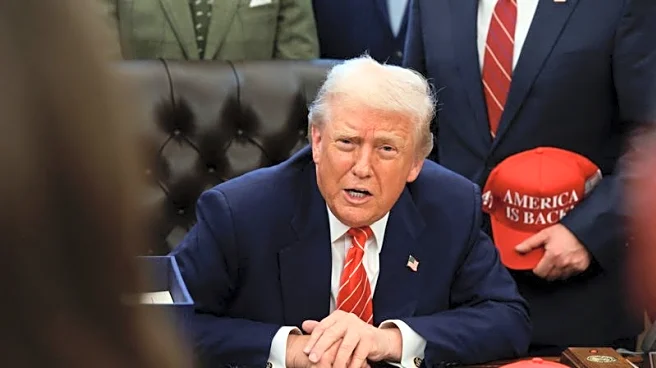
President Trump, alongside a bipartisan group of governors, has announced a new initiative aimed at curbing rising electricity costs associated with artificial intelligence data centers. The plan, unveiled
at the White House, requires these data centers to generate their own electricity. This move is part of a broader effort to address voter concerns over increasing residential power costs, particularly in the Mid-Atlantic region. Energy Secretary Chris Wright and Interior Secretary Doug Burgum, along with Governors Wes Moore (D-Md.), Josh Shapiro (D-Pa.), and Mike DeWine (R-Ohio), signed the agreement. The pact calls for PJM, the largest power grid operator in the U.S., to invest $15 billion in new power plants and to cap the charges existing power plants can impose in the PJM capacity market. This initiative is a response to the significant electricity consumption by data centers, which accounted for 4.4% of total U.S. electricity in 2023, with projections indicating a rise to 6.7-12% by 2028.
Why It's Important?
The initiative is significant as it addresses the growing energy demands of AI data centers, which are expected to consume an increasing share of the nation's electricity. By mandating that these centers generate their own power, the plan aims to alleviate the burden on the existing power grid and prevent further price hikes for consumers. This move could also stimulate investment in new power generation facilities, potentially creating jobs and boosting local economies. Additionally, the plan reflects a strategic effort to balance technological advancement with sustainable energy practices, ensuring that the growth of AI does not come at the expense of affordable energy for the public. The involvement of key political figures, including potential future presidential candidates, underscores the political importance of energy affordability.
What's Next?
The PJM Board is expected to release a decision following a multi-month stakeholder process on integrating large load additions. This decision will determine how the White House directive aligns with PJM's existing strategies. The outcome could influence future regulatory measures and investments in the energy sector. Stakeholders, including technology companies and energy providers, will likely engage in discussions to assess the financial and operational implications of the new requirements. The initiative may also prompt other regions to consider similar measures as they face their own energy challenges. As the plan unfolds, it will be crucial to monitor its impact on electricity prices and the broader energy market.