
What's Happening?
The Commission for the Conservation of Antarctic Marine Living Resources (CCAMLR) is facing a potential expansion of the krill fishery into previously unfished regions of Antarctica. Traditionally, krill fishing
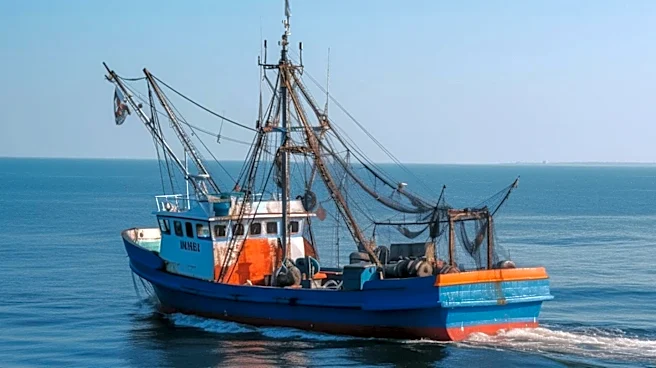
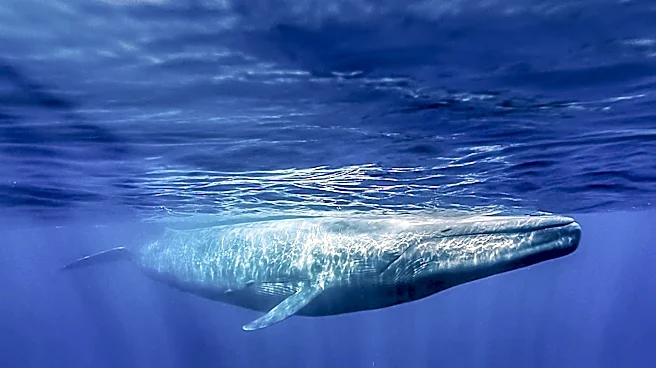
has been concentrated in the southwest Atlantic, particularly around the Antarctic Peninsula and South Orkney Islands. However, this year, major krill supertrawlers have indicated plans to fish in areas that have not seen commercial krill fishing since 1991. These areas are crucial feeding grounds for endangered blue whales. The expansion could effectively double the current krill catch without increasing the limits in the heavily regulated waters of the Antarctic Peninsula. This move comes after CCAMLR failed to renew a spatial distribution measure that prevented concentrated fishing in specific areas, leading to intensified fishing pressures and an early closure of the fishery last season.
Why It's Important?
The expansion of krill fishing into new areas poses significant ecological risks, particularly for endangered species like the blue whale. Krill are a foundational species in the Antarctic ecosystem, serving as a primary food source for many marine animals. Overfishing in these new areas could disrupt the food web, affecting not only whales but also other species dependent on krill. The decision to expand fishing without increasing catch limits in regulated areas highlights a potential loophole in conservation efforts, allowing for increased extraction without formal consensus. This could undermine international conservation goals and set a precedent for future resource management in ecologically sensitive regions.
What's Next?
If the expansion proceeds, it could lead to increased scrutiny and calls for stricter regulations from environmental groups and international bodies. Stakeholders, including conservation organizations and governments, may push for renewed discussions on catch limits and spatial distribution measures to protect vulnerable ecosystems. The situation may also prompt further scientific research to assess the impact of expanded krill fishing on the Antarctic ecosystem and its species. Continued monitoring and advocacy will be crucial to ensure that conservation measures keep pace with industrial interests.