






What's Happening?
The Contra Costa Mosquito and Vector Control District (District) has confirmed the detection of invasive Aedes aegypti mosquitoes in multiple areas of Brentwood, California. This indicates a wider presence of these mosquitoes in the city than previously
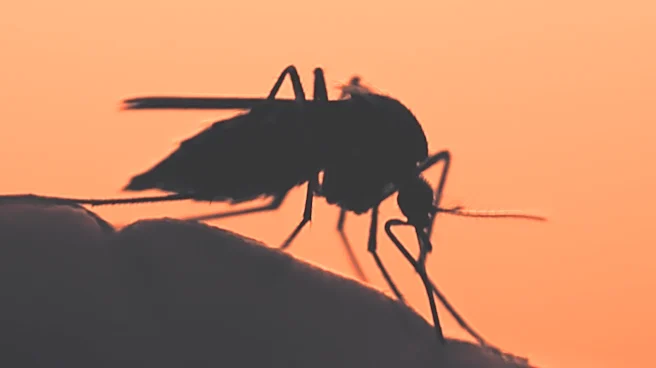
known. The initial detection occurred in response to a resident's request for mosquito service, with subsequent trapping revealing their presence in other parts of Brentwood. Aedes aegypti mosquitoes are known to bite primarily during the daytime and are capable of transmitting viruses such as Zika, dengue fever, chikungunya, and yellow fever. In response to this expanded detection, the District plans to implement truck-mounted larval mosquito control in affected areas of Brentwood within the coming week. The objective of this treatment is to reduce the population of immature mosquitoes before they mature into biting adult females. Residents are urged to report any daytime biting mosquitoes to the District and to take proactive measures to eliminate standing water around their homes, as these mosquitoes can breed in very small amounts of water.
Why It's Important?
The expanded presence of Aedes aegypti mosquitoes in Brentwood, California, carries significant public health implications for the U.S. The ability of these mosquitoes to transmit serious diseases like Zika, dengue fever, chikungunya, and yellow fever poses a direct threat to community health. While these diseases are not endemic to the U.S., the establishment of a vector capable of transmitting them increases the risk of local outbreaks, especially with increased global travel. The need for community participation in mosquito control, as highlighted by the District, underscores the challenge of managing invasive species in urban environments. The economic impact could include increased healthcare costs for treating mosquito-borne illnesses and potential disruptions to local tourism or outdoor activities if outbreaks occur. Furthermore, the situation emphasizes the ongoing need for robust public health surveillance and rapid response mechanisms to prevent the spread of vector-borne diseases within the U.S. The District's planned larval control efforts are crucial in mitigating immediate risks, but long-term community engagement in eliminating breeding sites is essential for sustainable control.
What's Next?
In the immediate future, the Contra Costa Mosquito and Vector Control District will conduct truck-mounted larval mosquito control operations in portions of Brentwood within the next week. This intervention aims to reduce the population of immature Aedes aegypti mosquitoes. Residents are strongly encouraged to actively participate in prevention efforts by regularly checking their properties for standing water and eliminating potential breeding sites. This includes emptying water from buckets, containers, flowerpot saucers, toys, tarps, bird baths, pet water bowls, and clearing clogged drains and gutters. The District also advises residents to report any daytime biting mosquitoes and to use effective mosquito repellents containing DEET, Picaridin, Oil of Lemon Eucalyptus, or IR3535 when outdoors. The success of these measures will depend heavily on community cooperation and adherence to preventive guidelines. Ongoing surveillance and public awareness campaigns will likely continue to be critical components of the District's strategy to manage and control the spread of these invasive mosquitoes.
Beyond the Headlines
The detection of invasive Aedes aegypti mosquitoes in an expanded area of Brentwood highlights a broader ecological and public health challenge facing many U.S. communities. The increasing spread of these mosquitoes, often linked to climate change and global trade, means that regions previously unaffected by certain mosquito-borne diseases are now at risk. This situation underscores the importance of integrated pest management strategies that combine professional control efforts with active community involvement. Ethically, there is a shared responsibility between public health agencies and individual citizens to protect community health. The presence of these mosquitoes also raises questions about the long-term adaptation of public health infrastructure to new vector-borne threats and the need for sustained funding for mosquito control and research. Culturally, it may necessitate a shift in public perception regarding mosquito control, moving from a seasonal nuisance to a year-round public health imperative, especially in areas where these invasive species establish themselves.