


What's Happening?
The International Organization for Migration (IOM) has issued a warning that the humanitarian common pipeline in Sudan, which supplies over 100 humanitarian organizations, could run out of supplies within two weeks. Without additional funding, the IOM anticipates
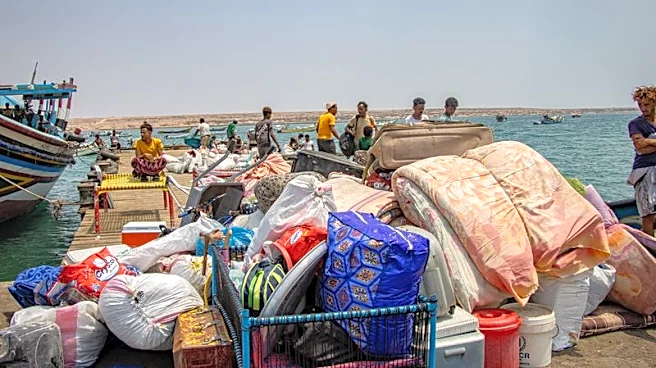
that operations could cease entirely by the end of the year. This pipeline has been crucial in delivering shelter materials, non-food items, and hygiene supplies to more than 2.84 million people since July 2023. IOM spokesperson Zoe Brennan highlighted that approximately 8.6 million internally displaced people in Sudan currently lack adequate shelter, exacerbated by ongoing fighting, flooding, and heavy rains. The absence of proper shelter in overcrowded displacement sites increases risks such as disease, gender-based violence, family separation, and forced displacement. The IOM requires $15 million to maintain minimum operating capacity for 12 months, supporting about 305,000 people, and $42 million to expand operations to reach up to 1 million people. Mohamed Refaat, IOM Sudan Chief of Mission, confirmed that despite contacting partners like the Turkish government and the European Union, no new funding has been secured yet.
Why It's Important?
The potential shutdown of Sudan's humanitarian common pipeline carries severe implications for millions of internally displaced people and war-affected communities who rely on humanitarian assistance. The IOM's warning underscores a critical funding shortfall that could dismantle a vital aid delivery system, which, if lost, would be difficult and costly to restore. The ongoing conflict, coupled with natural disasters, has created a dire humanitarian crisis, leaving families in makeshift shelters with limited access to basic necessities like water, sanitation, healthcare, and household supplies. The cessation of aid operations would exacerbate existing vulnerabilities, leading to increased suffering, heightened health risks, and a potential surge in gender-based violence and family separations. This situation highlights the fragility of humanitarian efforts in conflict zones and the urgent need for sustained international support to prevent a further deterioration of the crisis. The inability to secure funding also reflects broader challenges in international aid, where competing global crises strain resources and attention.
What's Next?
The immediate focus for the IOM is to secure the necessary funding to prevent the collapse of the humanitarian common pipeline in Sudan. The organization is actively seeking $15 million to maintain minimum operations for 12 months and $42 million to expand its reach. This involves continued engagement with international partners, including governments and organizations, for both financial contributions and in-kind donations such as tents and non-food items. Should funding not materialize, the IOM will face the difficult decision of scaling down or halting operations, which would necessitate a re-evaluation of aid distribution strategies by other humanitarian agencies. The long-term consequences of a pipeline shutdown would involve a significant increase in humanitarian needs and a prolonged period of rebuilding the aid infrastructure, even if funding becomes available later. The international community will be closely watching to see if a diplomatic and financial solution can be reached to avert a deeper humanitarian catastrophe.
Beyond the Headlines
The impending crisis in Sudan's humanitarian corridor extends beyond immediate supply shortages, touching upon the ethical responsibilities of the international community and the systemic challenges of aid delivery in protracted conflicts. The IOM's struggle to secure funding highlights a broader issue of 'donor fatigue' or shifting priorities, where the sustained needs of long-term crises like Sudan's can be overlooked. The potential loss of operational capacity for the pipeline, described as difficult to restore, points to the complex and often invisible infrastructure required for effective humanitarian response. This infrastructure includes not just physical supplies but also logistical networks, trained personnel, and established relationships with local communities and authorities. The breakdown of such a system could lead to a 'humanitarian vacuum,' where the most vulnerable populations are left without any recourse, potentially fueling further instability and displacement. This situation also raises questions about the effectiveness of current international funding mechanisms and the need for more predictable and sustainable financial commitments to humanitarian aid.