





What's Happening?
Free speech advocates have raised concerns over the Federal Communications Commission's (FCC) decision to conduct an early review of ABC's broadcast licenses. This move has been criticized as a potential threat to the First Amendment and an example of federal
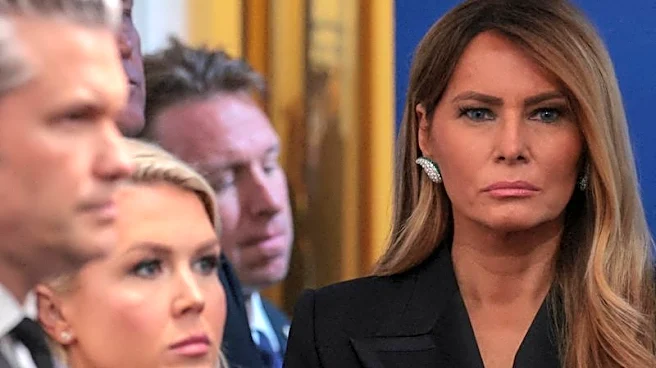
overreach. The FCC, which regulates the broadcast television industry, announced the review following a controversial joke made by ABC late-night host Jimmy Kimmel about First Lady Melania Trump. The review, initially linked to Disney's diversity, equity, and inclusion practices, was reportedly expedited after the joke aired. Critics, including the Freedom of the Press Foundation and the Knight First Amendment Institute, argue that the FCC's actions represent government retaliation and an attempt to intimidate ABC. Anna M. Gomez, the lone Democratic appointee on the FCC panel, described the action as unprecedented and politically motivated.
Why It's Important?
The FCC's decision to review ABC's licenses has significant implications for media freedom and the First Amendment in the United States. If perceived as government retaliation, it could set a precedent for increased governmental control over media content, potentially stifling free speech and journalistic independence. This situation highlights the tension between government oversight and media freedom, with potential consequences for how broadcasters operate. The outcome of this review could influence future interactions between media companies and regulatory bodies, impacting the landscape of American media and its ability to critique government actions without fear of retribution.
What's Next?
ABC and Disney have 30 days to respond to the FCC's order. The companies are expected to defend their qualifications as licensees under the Communications Act and the First Amendment through legal channels. The outcome of this review could lead to further legal battles over media regulation and First Amendment rights. Stakeholders, including media companies and civil liberties groups, will likely continue to monitor and respond to developments, advocating for media freedom and challenging any perceived overreach by the FCC.