
What's Happening?
South Korea is intensifying its emergency economic planning as Prime Minister Kim Min-seok warns of potential 'worst-case scenarios' due to the ongoing Middle East conflict. The government is setting up an emergency economic task force to coordinate efforts
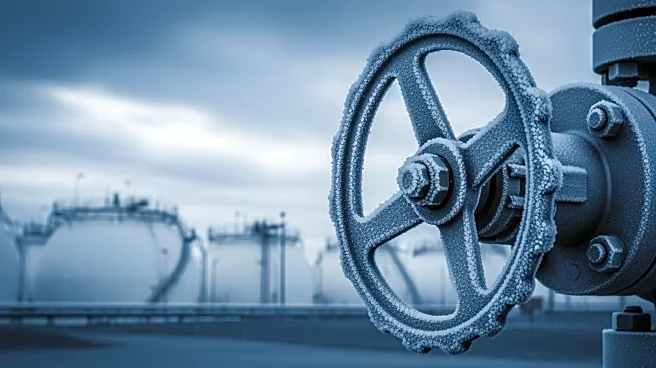
across ministries. South Korea imports a significant portion of its crude oil and liquefied natural gas from the Middle East, making it vulnerable to disruptions. The Strait of Hormuz, a critical passage for global energy flows, has been closed by Iran, exacerbating global energy market instability and inflationary pressures.
Why It's Important?
The potential disruption of energy supplies from the Middle East poses a significant threat to South Korea's economy, which heavily relies on imported energy. The closure of the Strait of Hormuz could lead to increased energy prices, affecting industries and consumers. The government's proactive measures, including diversifying energy sources and imposing a fuel price cap, aim to mitigate these risks. The situation underscores the importance of energy security and the need for South Korea to explore alternative energy sources to reduce dependency on volatile regions.
What's Next?
South Korea's government will continue to monitor the situation closely and adjust its strategies as needed. The emergency task force will meet regularly to assess the impact on energy, the macroeconomy, and financial markets. The government may further diversify its energy sources, potentially increasing reliance on coal and nuclear power. Stakeholders, including businesses and consumers, will need to adapt to potential changes in energy prices and availability. The situation may also prompt South Korea to strengthen its diplomatic efforts to ensure stable energy supplies.