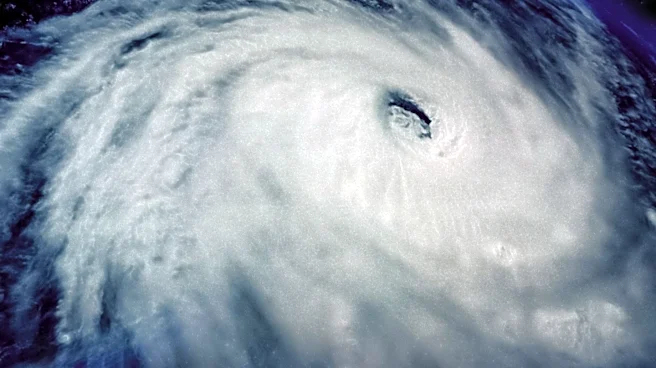




What's Happening?
Typhoon Dolphin, one of the strongest typhoons to hit China this year, made landfall twice in Zhejiang Province, bringing with it severe winds and heavy rainfall. The typhoon first landed in Taizhou City and later in Wenzhou City, with wind speeds reaching
up to 151 kilometers per hour. The Chinese Central Meteorological Observatory issued a red alert, the highest level of warning, as the storm caused significant disruptions, including flooding and landslides. Over a million people have been evacuated from affected areas to ensure their safety.
Why It's Important?
The impact of Typhoon Dolphin underscores the vulnerability of coastal regions to extreme weather events, which are becoming more frequent and severe due to climate change. The large-scale evacuations highlight the importance of disaster preparedness and response systems in mitigating the effects of such natural disasters. This event also serves as a reminder of the potential economic and social disruptions caused by climate-related events, affecting infrastructure, agriculture, and local economies. The response to the typhoon will be critical in assessing the effectiveness of current emergency management strategies.
What's Next?
As Typhoon Dolphin moves inland, it is expected to weaken, but the risk of continued heavy rainfall and subsequent flooding remains. Authorities will need to focus on recovery efforts, including restoring infrastructure and providing aid to displaced residents. The event may prompt a review of existing disaster preparedness plans and could lead to increased investment in infrastructure resilience. Additionally, there may be calls for international cooperation in addressing the broader challenges posed by climate change and its impact on weather patterns.