



What's Happening?
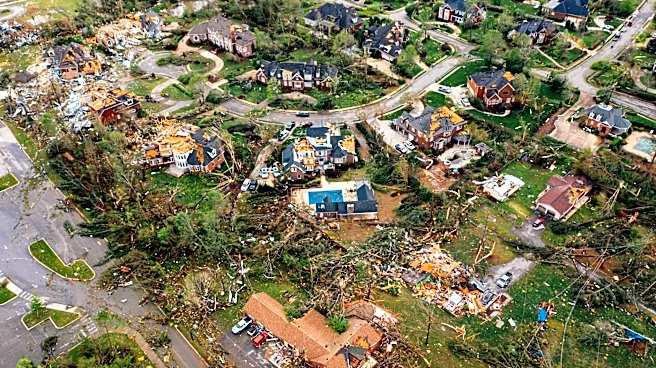
A severe storm struck Kansas City, Missouri, on Wednesday morning, causing significant damage to an apartment complex located in the 100 block of Northwest Harlem Road. The storm ripped the roof off one side of the building, sending heavy pieces of sheet
metal and wood crashing onto vehicles in the parking lot below. This extensive damage has resulted in the displacement of more than 60 residents. Residents described experiencing large hail and a fast-moving storm that offered little warning. Brice Miller, a resident, recounted hearing the roof being torn off, describing the sound as very loud. Another resident, Theron Ratliff, discovered his truck was damaged by the falling debris. Crews spent the day clearing debris and trimming damaged areas. No injuries have been reported, but the complex remains without power.
Why It's Important?
This incident highlights the immediate and devastating impact of severe weather events on residential communities and infrastructure. The displacement of over 60 residents underscores the critical need for emergency housing and support services in the aftermath of such disasters. For the affected individuals, the loss of their homes and personal property, including vehicles, represents a significant financial and emotional burden. The community response, with neighbors assisting in cleanup efforts, demonstrates the importance of local solidarity during crises. Furthermore, the event serves as a stark reminder for property owners and residents about the necessity of robust building maintenance and preparedness measures against extreme weather, especially in regions prone to severe storms. The lack of power also points to broader infrastructure vulnerabilities that can be exposed by natural disasters.
What's Next?
In the immediate future, the displaced residents will require ongoing support for temporary housing and assistance with assessing and recovering their belongings. The apartment complex management will need to undertake a comprehensive assessment of the structural damage to determine the scope of repairs and the timeline for residents to potentially return. Insurance claims for both property damage and vehicle damage will be a primary focus for affected individuals. Local authorities and community organizations will likely continue to coordinate relief efforts to provide essential resources to those impacted. Additionally, there may be discussions within the community and among property developers regarding enhancing building codes or implementing more resilient construction practices to better withstand future severe weather events in Kansas City.
Beyond the Headlines
The incident extends beyond the immediate physical damage, touching upon the psychological toll of sudden displacement and loss. Residents like Theron Ratliff expressed the shock and difficulty in processing the scale of destruction, emphasizing the realization of how close they came to a much worse outcome. This experience can lead to long-term stress and anxiety, highlighting the need for mental health support in disaster recovery. The community's spontaneous efforts to help one another, as noted by Brice Miller, underscore the intrinsic human need for connection and mutual aid during times of crisis. This collective response can foster stronger community bonds but also reveals potential gaps in formal disaster preparedness and response mechanisms that could be addressed for future events. The event also raises questions about the adequacy of current urban planning and infrastructure resilience in the face of increasingly unpredictable weather patterns.